
Miami Florida: A National Treasure
Words by Hayden Oh (@haydenoh)
“So pretty much I move in, then I go out to Willard Park, and I ask a bunch of older dudes, ‘Yo, I'm trying to look for some weed, do you guys know where I can find some weed? You guys look like you have weed.’ And they're like, ‘Yeah, we got you, we got you. You came and talked to the right people,’ so I was immediately introduced to the ‘leftovers’ of People's Park and that whole People's Park culture…so that's what appointed me into Berkeley, them giving me weed, and also a gram of DMT for free.”
- Miami Florida
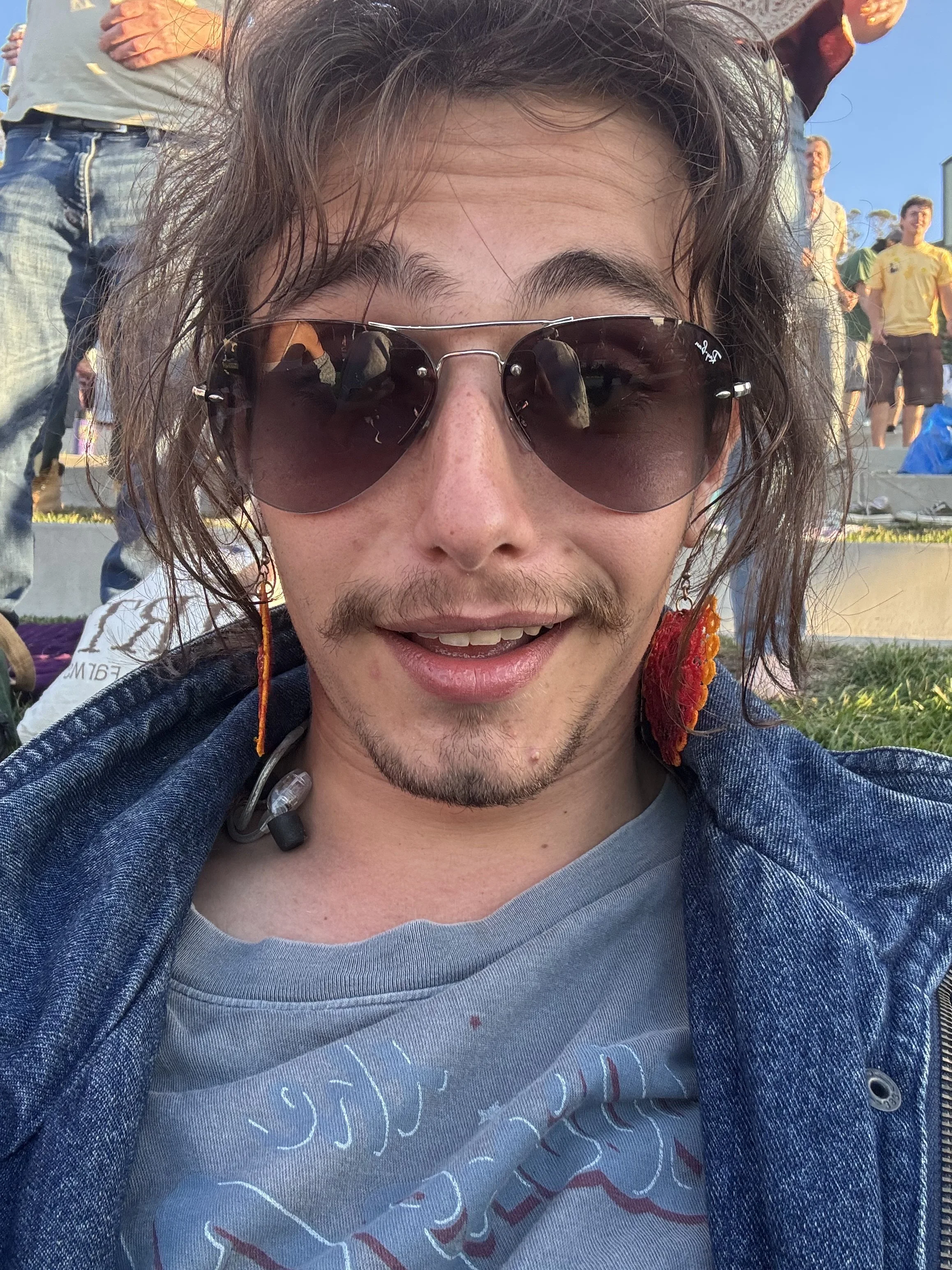
Miami Florida. (Photo courtesy of Miami Florida).
I remember being warned of the socialist liberal hippie left-wing Marx-loving lunatics that, allegedly, infested Berkeley when I was leaving my conservative hometown for college. A lot of the country seems to have this perception of Berkeley that it’s some liberal dystopia. So when I went back to Colorado for Thanksgiving my freshman year, the non-Californians couldn’t believe that I hadn’t yet come face-to-face with one of those "crazy liberals” from their imaginations, having mostly just encountered the crazy Big Tech-wannabes and consulting club proletariat.
The closest I’d come to seeing a real-life radical hippie student or whatever was when I’d see Miami in the wild: Miami at the chess tables by the Walgreens on Telegraph, Miami at the other chess tables a few blocks down from my dorm on Haste, Miami on his e-bike, Miami working late at Artichoke’s, scootering for Duffl, interviewing on Sproul, etc. – Miami and his ponytail were everywhere all the time, and Berkeley appeared so seamlessly his most natural habitat.
Miami Florida seemed like he spawned into Berkeley, California straight from the 60s or 70s when the school first got its radically left, activist, hippie reputation. Miami is greatly perceived as some kind of enigmatic hippie-like entity to many, myself included, and is the topic of countless drunken conversations that attempt to make sense of who he is but fail to even scratch his surface. I sat down with Garb’s own Miami Florida for 52 minutes, hoping to uncover the answers to the many, many questions surrounding his identity, persona, projects, and unconventional name.
Miami Florida featured in Xpress Magazine’s Instagram reel covering the “Kirkiversary” at UC Berkeley. (Ben Rubin and Josh Miranda / Xpress Magazine, 2026).
What is Miami’s real name?
Speculation surrounding Miami’s name tends to be a predominant topic of conversation when it comes to him. To clear up the rumors once and for all, I first asked Miami about his name, multiple times:
MIAMI: I got some definitely odd parents. Maybe a little bit more out there. I mean, they named me Miami Florida.
HAYDEN: Did they?
MIAMI: Yeah.
HAYDEN: Was “Miami” your given name?
MIAMI: Yeah, God-given.
HAYDEN: Like on your birth certificate?
MIAMI: Birth certificate, yeah.
HAYDEN: There are some rumors that you changed your name. Is that true, or is it that just word on the street?
MIAMI: I am who I've always been.
HAYDEN: You've always been “Miami?”
MIAMI: Of course.
HAYDEN: You were born “Miami?”
MIAMI: Are we not the places we're from? Maybe my parents understood that the best.
HAYDEN: So when did you start going by “Miami?”
MIAMI: Right out the womb.
HAYDEN: Did you change your last name to Florida?
MIAMI: No, no. My parents named me Florida. I have a separate last name from everyone else.
HAYDEN: So they gave you “Miami Florida” as your given name?
MIAMI: When they gave me that name, they kind of got made fun of, so they had to change the naming convention. Instead of naming my sister Orlando where she was conceived, they named her Margarita after our great aunt.
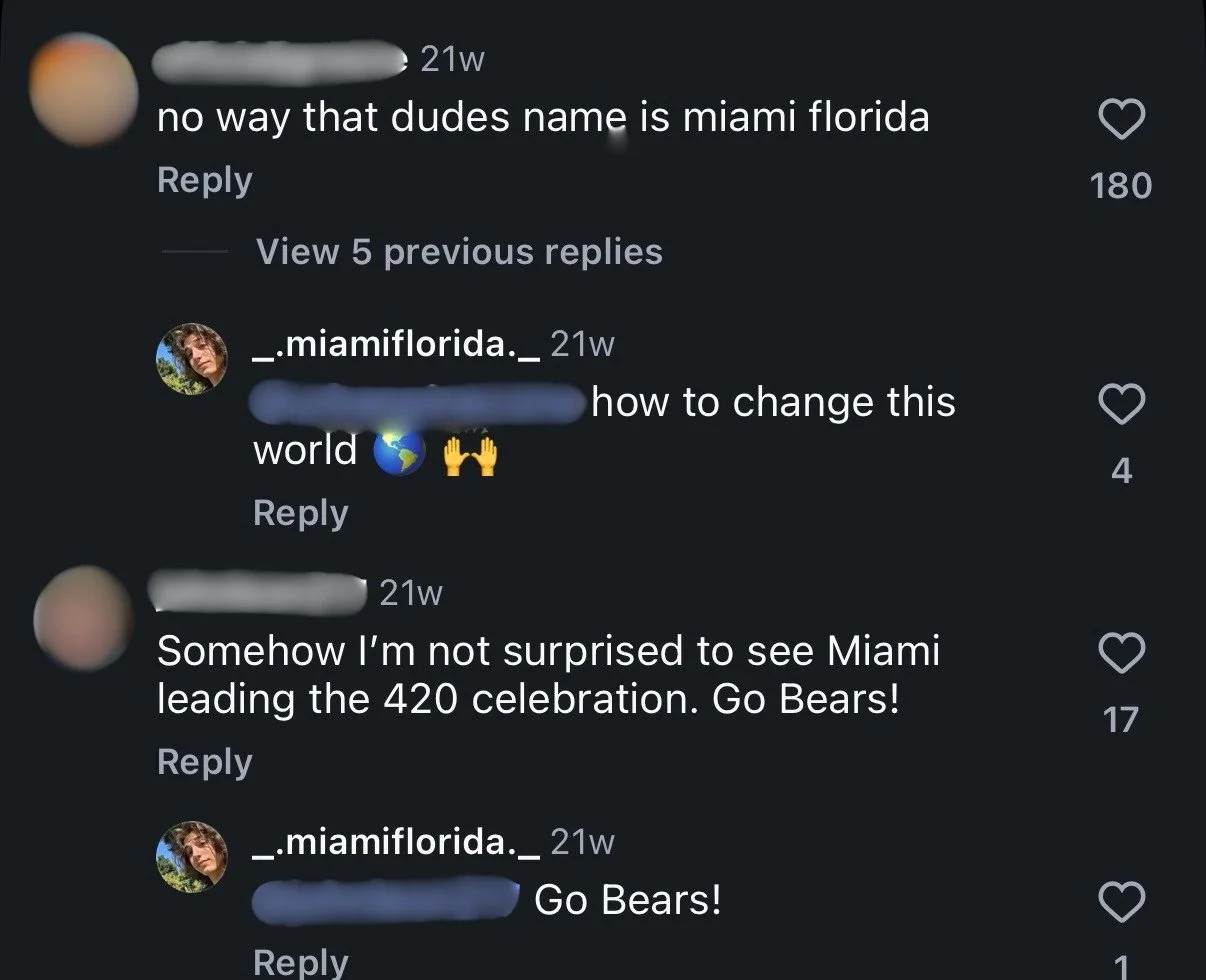
As seen in the comment section of The Daily Cal’s [@dailycal] 4/20 Instagram reel, featuring an interview with Miami Florida (The Daily Cal, 2026).
MIAMI: I think the most truthful time you ever look at someone is when you don't even know their name. I mean, think about it, someone gives you their name, and immediately, you have some perception of them. It's defined into whatever context comes behind that name.
HAYDEN: What context comes behind your name?
MIAMI: Well, my name, it's who I am. The context is everything I've done.
Miami’s response to all those wondering: Miami Florida is his given, God-given, on-his-birth-certificate, real name from the womb, and his name represents his hometown of Miami, Florida and the context of all that he has done and all that he is.
Who is Miami?
“When I was four [years old] in karate, they would teach me a new move, and then I would do something different. And they'd be like, ‘That's wrong. You can't do that.’ My quote would be, ‘ You don't know this one.’”
- Miami Florida
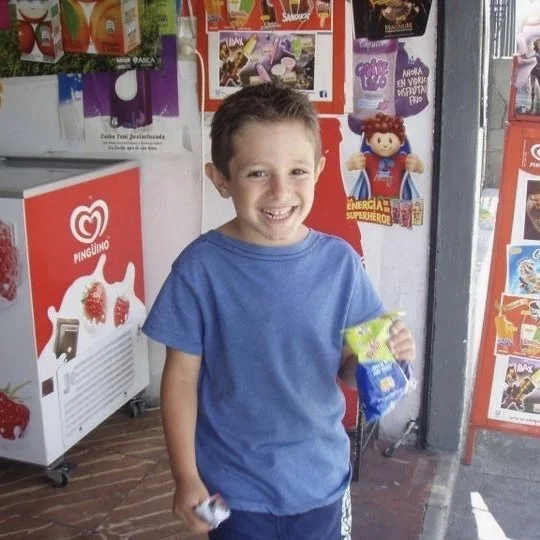
Miami as a child. (Photo courtesy of Miami Florida)
Miami Florida was born in Miami, Florida at Miami Baptist Children’s Hospital, which he described as having “a little pineapple on it.” It was the early morning of Halloween 2005, 12:18 a.m., to be exact. That holy day Miami Florida entered the world, a little baby joint probably came out the womb with him, wedged between his little baby Miami fingers.
“My parents, they definitely knew I was something maybe a little off the rocker,” Miami said.
Miami recalled the beginning of his “creative journey” when his fourth grade English teacher, Ms. Wolf, would assign his class one or two pages of creative writing daily.
“I started with writing. I did music. Eventually, in eighth grade, I started playing drums with paint buckets. Eventually, I got a drum set. And then I played guitar. I played bass. Played a little keyboard too. And I always did live sound, so I was in drama in sixth grade up [and] I did theater even in 12th grade. But I've always been doing live audio and stuff. I was up there with the soundboard. I was doing the music and everything, and then I did that for a church. I worked at a church for three years,” Miami said.
On his personal blog, Miami described working at the First United Methodist Church of Coral Gables every Sunday for three years, which gave him “cash to buy weed and a drum set,” but was also a formative experience for him.
Organized religion was a major part of Miami’s upbringing. In fact, Miami attended a private Jesuit school for a year, but was “kicked out” for fighting.
“I was a little angry kid,” Miami said.
Miami, California
“My parents, they knew Berkeley as the hippie school. They didn't know anything else. They just knew they were shipping me off to California, and they were like, ‘Fuck, weed’s legal over there, and he fucking loves weeds. So, shit. What's gonna happen?’”
- Miami Florida
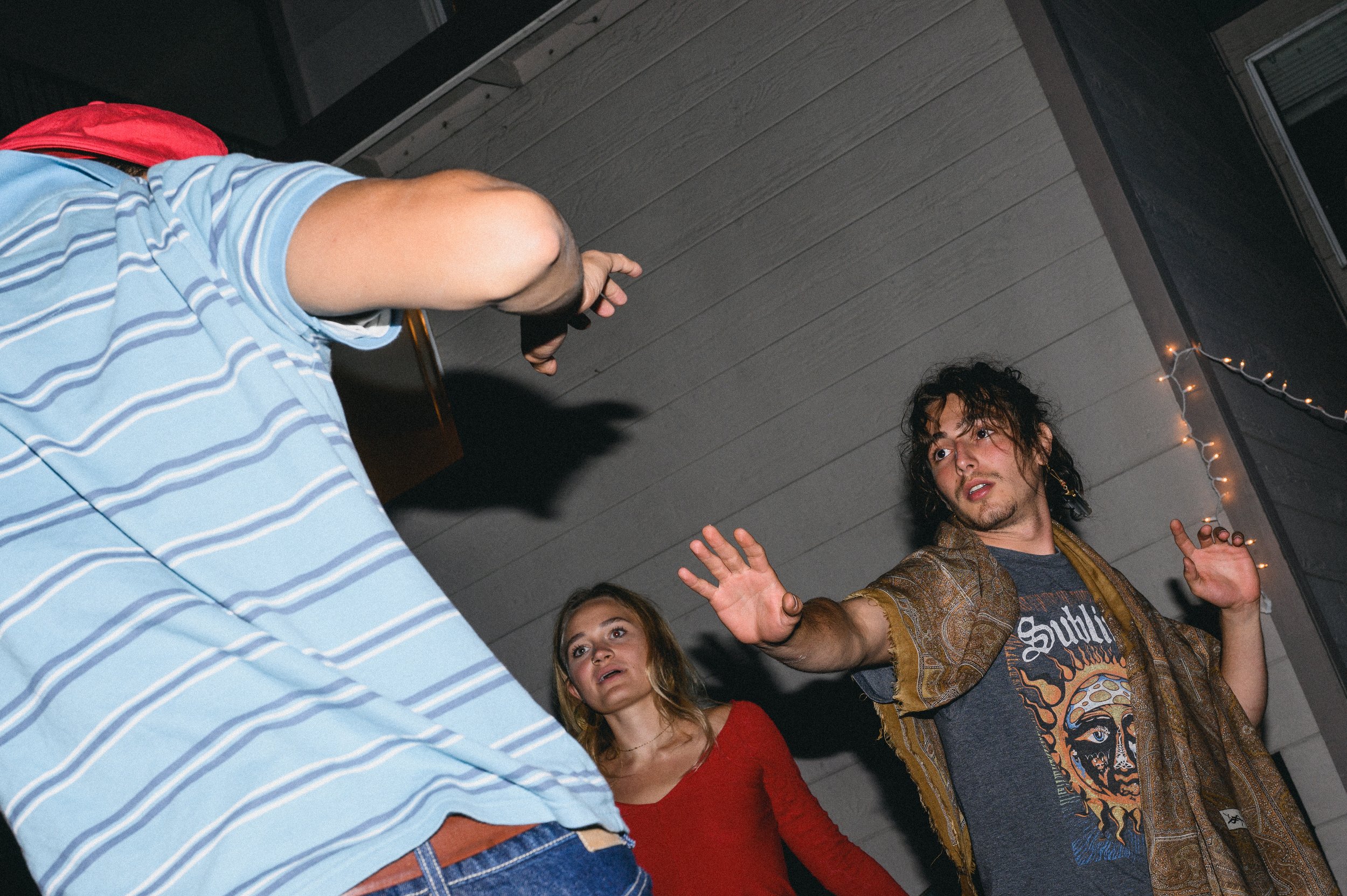
Miami partying. (Photo by Tallulah Buscher)
Knowing Miami now as a “Berkeley Hippie,” it’s hard to imagine him ever being a violent person, but Miami described changing schools as a transformative experience. At his new school, Miami continued to explore his creative endeavors and live a lifestyle that was considered rather unconventional in Florida.
“We don't have many hippies in Florida, but I was about the ‘hippiest’ you could get. Here's the thing, the term ‘hippie’ is a bad term for a group of people that people see as dirty [and] drug-addicted…Out here in California, since [people] are more connected to what hippie culture actually was, that isn't so much the case. But I come from Reagan Republican parents, and I come from a fascist state,” Miami said.
Miami initially dreamed of moving to New York City after high school to pursue his passion for videography at NYU Tisch. In high school, he worked as a videography intern for a media company handling projects for Lifetime and Fox, where he recorded and edited commercials. However, he was accepted to UC Berkeley and moved to California, where he further immersed himself in hippie culture.
“I'd hang out on the streets of downtown [Miami] every day. I'd get real sweaty skateboarding everywhere and have a fun time out there. Definitely doing drugs…When I came to California, particularly to Berkeley and to pretty much the epicenter of hippie culture in general, it definitely struck a chord with me and made me realize more about my lifestyle and what my thinking could be,” Miami explained.
“I hate being told what to do. You should put that quote specifically. ‘Don't tell me what to do.’ It's a motto for me.”
- Miami Florida
Miami recalled his first encounter with what’s left of the “hippie” community in Berkeley when he arrived his freshman year. He approached a few strangers at Willard Park searching for weed. In turn, those strangers introduced him to what he referred to as the “People’s Park culture.”
The “People’s Park culture” consists of individuals who strive to keep the spirit of People’s Park alive. People’s Park served as a symbol of free speech, radical activism, and the greater political counterculture that surfaced after the 1964 Free Speech Movement. Remnants of that counterculture persist today — living through communities like those of Willard Park or the chess tables on Telegraph — and Miami has immersed himself in them.
“The reason I hang out in those locations is because I am someone who believes you should talk to everyone in all senses in communication…I am not going to shy away from a conversation about being around that space. To be able to, it's coming from a point of privilege just because I know I have the social ability to do that…You see some of the smartest, most intelligent people from all walks of life from the university and around the world coming and playing chess. I just get high and sit at the chess table and yap and fucking talk to everyone that might come up…It's more about cultivating a space where everyone can be heard…and it’s more or less the spirit that People’s Park carried,” Miami said.
MIAMI: The change is in the mind of the people. If the people feel that spirit is still alive, then it is.
HAYDEN: Do you think it's still alive?
MIAMI: Do I think it's still alive? Well, shit. I'm here, and I'm writing. That's up to you.
What does Miami do?
The Berkeley Hippie Revival Project
Last winter, Miami launched the Berkeley Hippie Revival Project to generate conversation regarding what their website refers to as “UC Berkeley’s faults, the world’s shortcomings, and your most pressing issues.”
“I was talking to one dude who runs the chess club on Haste, and he told me, ‘Ground zero is right here. It's you and me. It's communication.’ So, a lot of what I do with the BHRP is going down, sitting down, talking with people, doing these art projects, talking with as many people as I can,” Miami said.
Miami can often be found on Sproul, discussing the “most pressing issues” that the BHRP combats.
“I chat with all the tables [on Sproul], particularly the Republican ones. … While I am necessarily against what they think their free speech motives are, they are still there trying to do speech, and I'm gonna be there. They do it in a divisive manner a lot of times, but I try not to get into that. I ask questions around that. I try to get into their actual thought process. And here at Berkeley, it's particularly way more interesting because when you talk to the people over here, you can never assume anything at all,” Miami explained.
Miami recalled a recent conversation he had with a member of the Turning Point USA chapter at Berkeley. Despite his “anarcho-communist” views conflicting with the member’s “anarcho-capitalist” ideas, Miami believes in the power of having conversations regarding political differences and, importantly, similarities.
“I have a lot more in common with that dude than a Joe Biden Democrat [in terms of political structure]…My point in this is that when you're down to talk and really try to ignore maybe the more divisive things that they're saying — I try to avoid that because I feel like what they do there is unhealthy — you can really find some very interesting points,” Miami said.
Through the BHRP, Miami raises awareness for both Berkeley-specific and broader political issues, whether that be through his creative writing on their blog or conversing with students on Sproul. Miami is always working to keep the spirit of People’s Park alive.
“I used to bring a milk crate out to Sproul and just yell for half an hour. I would say Mario Savio's speech, the very famous one. I would go on different rants and tangents, saying the revolution will not be televised or maybe verbally stated…If something big happens, I'll be there. That's what I attempt to do. I want to be there if there's something big,” Miami said.
Berkeley Barb
“I want to make people understand that they can do something that changes something. I'm out here, I'm trying to publish something. Does that change anything? People read it, and they think it does.”
- Miami Florida
Recently, wherever Miami goes, he is never without a copy of Barb, handing them out to everyone he encounters. Barb may be one of Miami’s more recent ventures, but the newspaper holds a rich history and reputation in Berkeley.
Berkeley Barb was founded in 1965 and served as an underground counterculture newspaper. Barb chronicled radical political movements and is widely known for their coverage of the Free Speech Movement, opposition to the Vietnam War, the Sexual Revolution, and their controversial printing of X-rated advertisements.
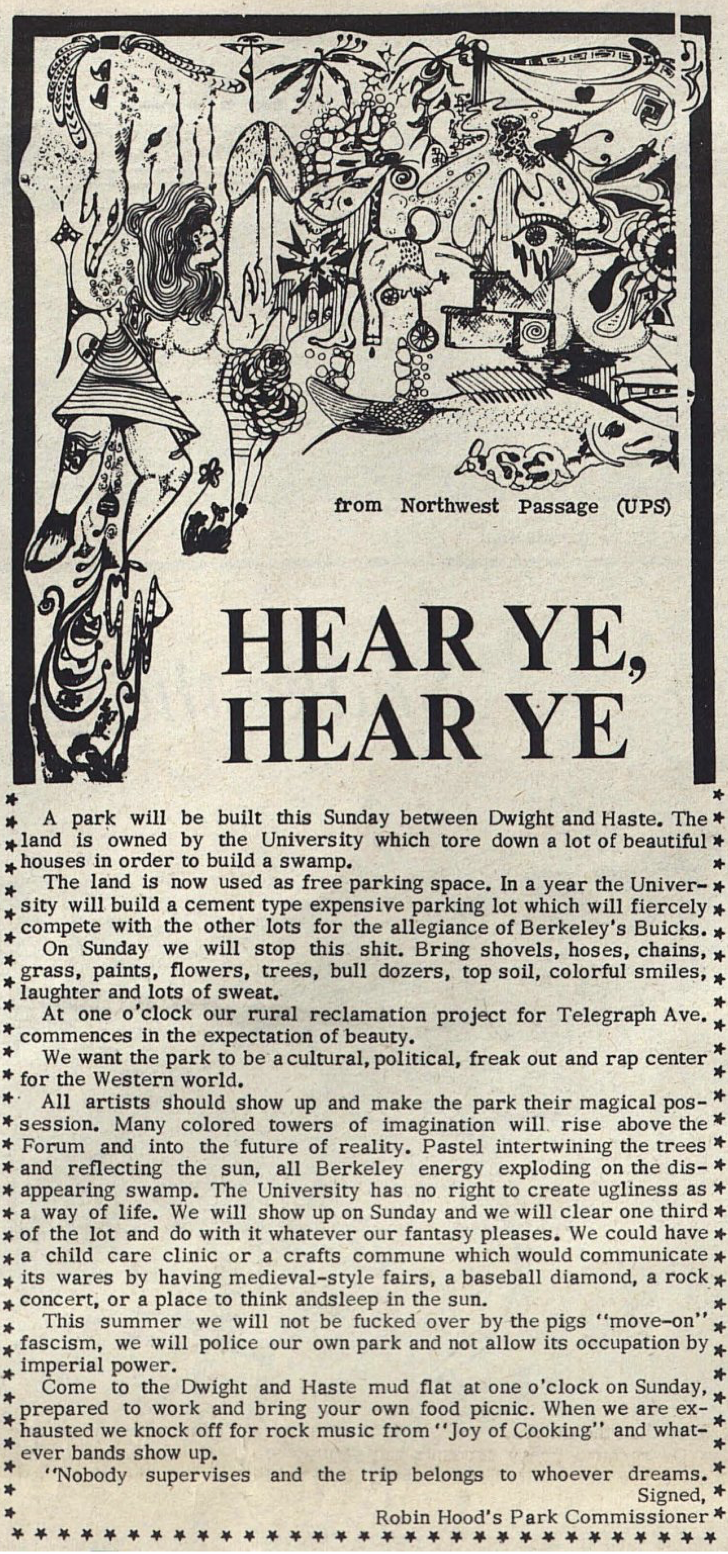
Berkeley Barb’s “Here Ye, Here Ye.” (Courtesy of Berkeley Barb’s online archive)
The newspaper shut down in 1980, but Barb’s legacy has continued to live on, not just within their archives but through People’s Park.
“The [Free Speech Movement] people, they all lived in what was People's Park in apartments. Then, after the FSM and all that shit, the university shut it down, bulldozed it all, and then it was just an empty lot. And then Barb was like, ‘Yo, everybody, come to this lot and fucking tear down the fence and fucking make a park,’” Miami explained.
Following the Free Speech Movement, Southside Berkeley was an epicenter of political radicalism and 1960s counterculture. UC Berkeley deemed these communities problematic and bought the land that would later become People’s Park, displacing the people who lived in the apartment buildings there. After evicting the residents, the University demolished the buildings, and the lot sat empty for about a year. In response, Barb published a notice that urged the community to come together and make a park on the empty lot, catalyzing the creation of People’s Park.
Miami was out talking to people for the BHRP when he met Natalie, the founder of a community art collective, and she explained to him the plan to bring Barb back. Miami was eager to join the effort.
“The reason we started is all tied together — People's Park and its closure, [and] what that means for where the University is at and their view of speech,” Miami said.
With the University’s recent seizure of People’s Park and development of the land into student housing, Barb, Miami, and other members of the Park’s counterculture feel like the fight is not over. The University continues to suppress voices and erase the history of the FSM and the culture that emerged from it.
“That's the fight. One [man I met on Telegraph believes] that the school is not letting in the controversial and the political [students]. Maybe that's the case. Maybe some still slip through. Who knows? I don't know. But one thing's for certain: the school has never and will never want that type [of student] because it causes only issues for them,” Miami said.
Barb refuses to let the University silence the voices of the people and aims to give the community a platform to be heard through their revival.
“I try to bring a voice out there. I try to bring anybody's voice out there. I want to see if I can help provide that platform because, shit, I can't. I can say a lot of things, but are people gonna want to listen to me? There needs to be a platform to listen to,” Miami said.
Since relaunching, Barb has released four issues, publishing art and writing from voices within the Berkeley community. With each newspaper Miami hands out from the endless stack in his satchel, he strives to bring attention to the resurgence and mission of Berkeley Barb.
“[The mission is to] not have the spirit wither away. But the voices are new. They're always new. We can't listen to Mario Savio's speech all day…[but] what can bring people to a rally cry now?” Miami asked.
Where is Miami?
“Everyone can catch me running balls naked through Moffitt's Main Stacks.”
- Miami Florida
Today, Miami continues his studies at UC Berkeley, pursuing his double major in film and cognitive science and minors in rhetoric and linguistics. He also explores his passions of videography, photography, writing, marijuana, and lasers.
You can spot Miami at the chess tables on Telegraph, Willard Park, lingering around Sproul, and riding his e-bike around Southside. Miami is truly everywhere all of the time, making conversation wherever he goes.
Miami’s current projects include: coordinating the Moffitt to Main Stacks Naked Run of R.R.R. week before finals, preparing for 420 on the Glade, and organizing events for Duffl. To all those wondering what an average day in the life of this guy who seems to do everything and be everywhere, here is an outline of his tentative agenda:
AN AVERAGE DAY IN THE LIFE OF MIAMI
“ I feel like the community wants to know how much weed I smoke.”
- Miami Florida
12:00 A.M. – “Partying, probably”; friends at his place; resting; “I’m chatting, I’m smoking”; making some Trader Joe’s gnocchi
3:00 A.M. – Miami’s bedtime
9:00 A.M. – Miami wakes up; maybe some laundry or homework; “I smoke a few joints before I leave”; visits chess tables
11:00 A.M. – First class of the day; “I smoke one or two joints before I get to class”; class ends; “I leave class. If [classes are] not back-to-back, I'll smoke a joint. If it is back-to-back, I might smoke a joint after the second back-to-back. If it's a lecture hall, a big one, that's weed central. I'm definitely getting super high. If it's like a smaller seminar,I'll only be slightly faded.”
3:00 P.M. - 12:00 A.M. – Tons of work; responding to emails and texts; set-up for an event for Duffl; “I'm always selling Barbs everywhere. Everyone I meet, I either give one to them or try to sell them on it”; talking to everyone; “It takes me like maybe four times as long to get anywhere because I have to chat with so many people”; working Duffl; “I'm always just trying to chat with people. I'm always grabbing another smoke”
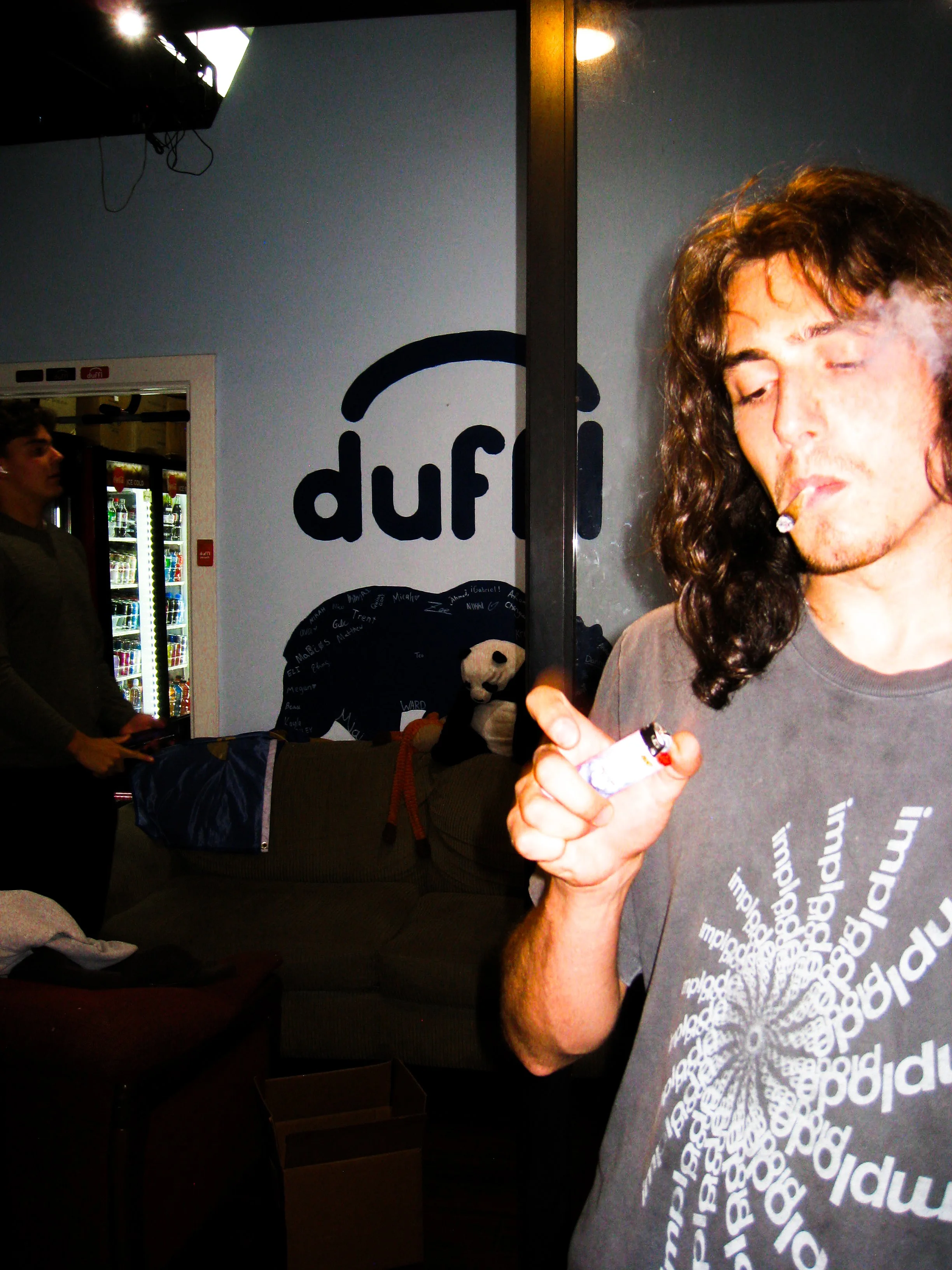
Miami smoking a joint outside of Duffl. (Photo by Tallulah Buscher).
In the midst of Miami’s hectic schedule and every joint he rolls, he lives each day seeking to engage in meaningful conversations with members of the Berkeley community with the intention of learning more about himself and the world around him.
“Existing is definitely the number one thing I think I've learned here recently. I love linguistics. I love the mind. I love film. I love learning about rhetoric and what that means for our greater society. But learning to not just enjoy a moment, but to understand everything that you feel. Because that's all you can understand. I feel like I'm getting better at that every day. And that's in very large part to the community that lives here. Maybe to the air, to the sun that I see. Maybe it's to the ocean, but I do like the Atlantic better,” Miami said.
Miami strives to catalyze change through all his endeavors. This guy really does it all, and he does so with the utmost unabashed passion.
Going into this interview with Miami, I hoped to answer all the questions those who know or know of him might have, but after listening to the recording repeatedly, attempting to make sense of the transcription, and trying to condense everything into one article, I have more questions for and about Miami than ever. But that’s what’s so special about Miami Florida — through all the mysterious things he does and cryptic things he says, Miami, by nature, creates space for conversation.
“[Everyone] should know that I am always down to talk, and that they should come up to me. If someone sees me, they should come up to me and make themselves known. And also one other thing, I'm sorry I forget people's names.”
Miami’s Message to the Readers:
“Let me... let me... put weed into this grinder, grind it, and I'll have an answer for you. All right, all right. What words do I want to say to the community? There are a lot of things I want to say to the community, fuck. You know, maybe I want to tell them to just smoke some weed, but I don't really care, man. You can just be yourself. You can just love. Maybe I just want to tell people to love. Shit. I don't know. Maybe I want to tell people to love, love the world around you, love yourself, and the more you love yourself, I think you understand why, you know, it's imperative for others to do so as well. And in that knowledge, you understand, well, fuck, I gotta be a little nicer to everybody, don't I? We're all a little mean. I'm a little mean. But, how can you grow beyond that?”
- Miami Florida
