
On Going West and Sleeping in the Open
Words by Mia Slumskie (@miaslumskie)
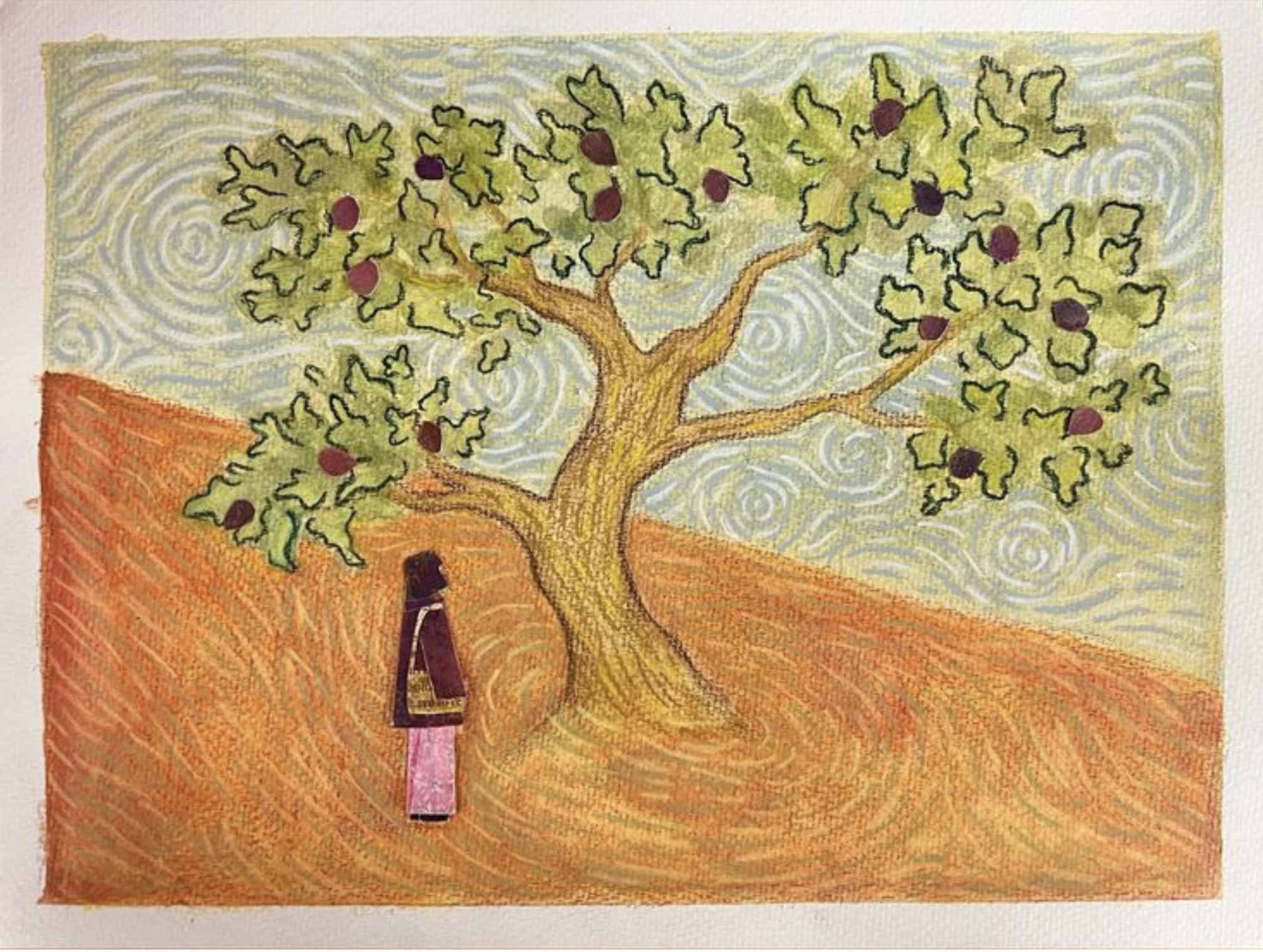
There’s this Sylvia Plath quote I’ve always liked: “I want to be able to sleep in an open field, to travel west, to walk freely at night.” I saved it to a Pinterest board some time ago, and it’s been at the back of my mind since. I think I like it because it puts this haunting, inexpressible feeling I often get into words. The desire to be everywhere at once. To be transient, out where life is happening. To suck the marrow out of life, at the very center of things. To travel and rest where I please, with nothing tying me to any place in particular. To go west — and north and south and east — where the land stretches out further than anyone can see and my fate is in the hands of whichever direction I step.
You’ve probably heard of Plath’s fig tree, whether you were depressed when you were 18 and read The Bell Jar or you saw a teenage girl on TikTok vaguely referencing it. She uses the metaphor of a fig tree to describe the possibilities of her future. The tree has an uncountable number of figs. One fig is a husband and children, one a professor, one a poet, and so on. But because “choosing one meant losing the rest”, Plath sits paralyzed in indecision. This quote, to me, feels like an extension of that.
But the JPEG I saved on Pinterest some years ago is deceptive — it takes Plath’s sentiments out of context. I came across the full quote more recently. It reads:
“Yes, my consuming desire is to mingle with road crews, sailors and soldiers, barroom regulars — to be a part of a scene, anonymous, listening, recording — all this is spoiled by the fact that I am a girl, a female always supposedly in danger of assault and battery. My consuming interest in men and their lives is often misconstrued as a desire to seduce them, or as an invitation to intimacy. Yes, God, I want to talk to everybody as deeply as I can. I want to be able to sleep in an open field, to travel west, to walk freely at night...”
—Sylvia Plath, The Unabridged Journals of Sylvia Plath
Plath isn’t offering a guide on how to live. She is lamenting the life lost. She is pleading for agency, not opportunity.
My fig tree, like Plath’s, extends in a million directions, the fruit ripening before my eyes. Each branch reaches to a corner of my soul and touches an aspiration of mine with outstretched fingertips. But, like Plath’s, my figs rot and drop to the ground as I sit watching. Not because of my indecisiveness, but because the consumption of each fig requires a masculinity I can never wholly possess.
And it is this limitation that seeps into every crack of my life. This summer I spent much of my time bar-hopping around central London. One evening I was speaking to a man several years older than me. He reminded me of my father. The World Cup was on, and we chatted for a bit about our shared hope for England’s victory. Later, as I left the bar with my friends, I turned to say goodbye. He touched the small of my back and gave me a smile I am much too familiar with. “Have a good night.” And I realized throughout our short conversation he had not been viewing me as a daughter figure or even as a person. My gender constricts my humanity. All of this is not some big revelation but instead a truth I have known for my whole life.
But how can all this coexist with my undeniable, enduring love of being a woman? Of femininity? How can this thing that restricts and takes simultaneously liberate and free? How can the femininity which projects me as a fleshlight with a personality be the same femininity that provides the grounds for deep ties between myself and other women? The ties I feel so intensely in a club bathroom, or when I share a joint with my friends, or through a glance shot over a dining table?
One thing is taken, and another is given in its place. Inanimity for the wordless language of women. It’s something to satiate as we wait for the pendulum to swing towards equity.
