
Outward Bound
Words by Audrey Sachs (@audrey.sachs)
Creative photoshoot by Tallulah Buscher (@tillybuscher)

The year is 1969, and America holds its breath as the first men descend onto the Moon during the Apollo program, their shoes sinking into the dense lunar soil, plumes of dust kicking into the air. Nixon’s on the line with Neil Armstrong and Buzz Aldrin, the call spanning over 200,000 miles; the country celebrates their victory in the space race with the USSR, Sputnik a forgotten relic of the past. Now, through the Artemis Missions, more than fifty years later, our generation will have its turn to see humanity touch down in a future that’s undeniably female through the Artemis Missions.
The Artemis program is split into five missions—all aimed at advancing space travel and human exploration of the lunar surface and Mars. As of late 2026, the first two have been completed, and the remaining missions planned throughout the next ten years. You might have seen Artemis II televised on the news this April when four astronauts orbited to the dark side of the Moon (hello Pink Floyd)—the side facing perpetually away from Earth. With Artemis IV in 2028, you’ll be able to tune into the first crewed lunar landing since 1972 and watch how some more small steps for man initiate even more great leaps for humanity. Or perhaps some small steps for women, as female presence in space has become increasingly frequent.
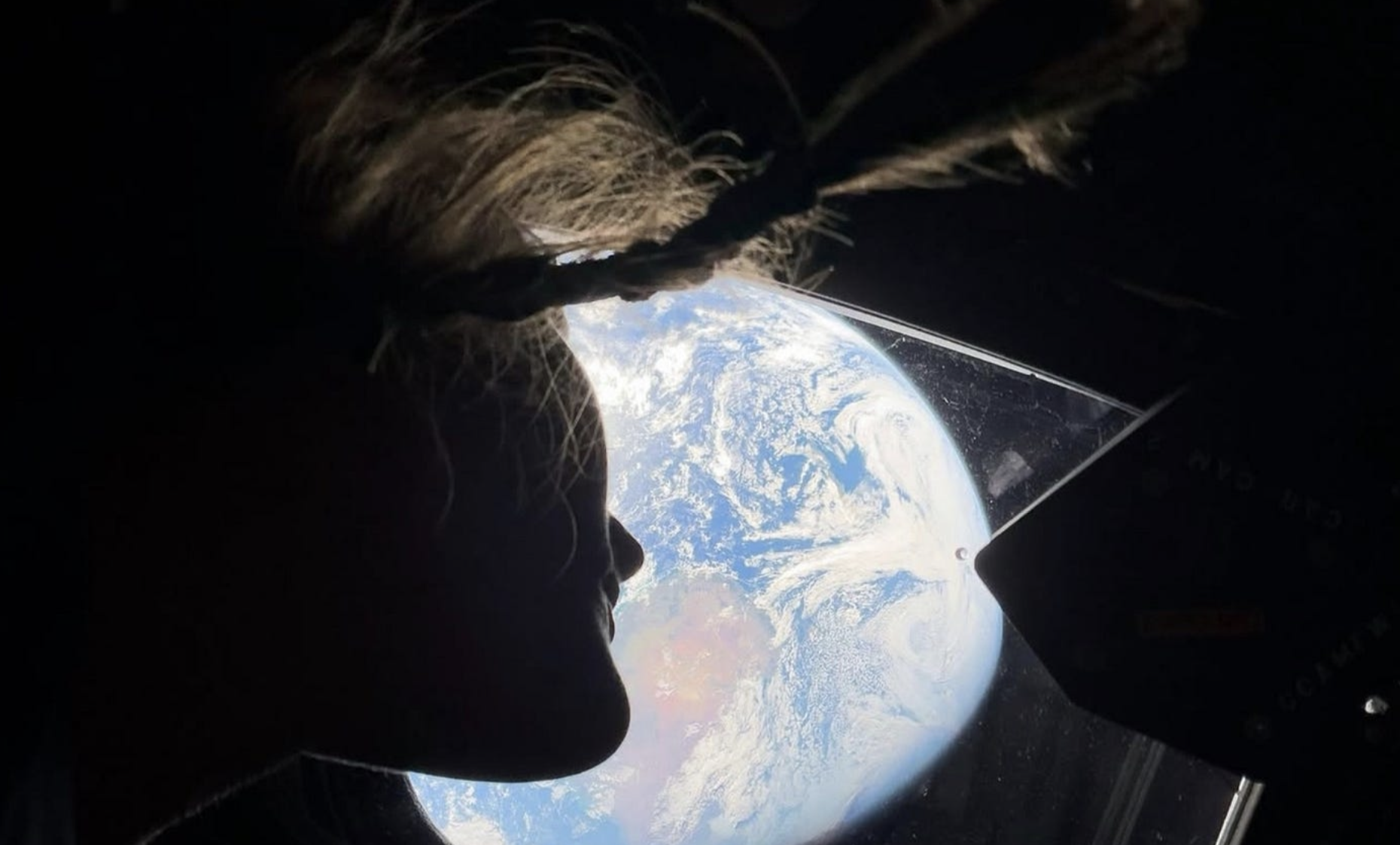
If you’ve heard about Artemis II, you better know about Christina Koch. If you’re not familiar, she’s the only female astronaut of the mission and the first woman to travel around the Moon. Ever. The picture below is one of the most iconic of the expedition. Koch peers down at us from the Orion spacecraft, her braid floating in zero-g as she takes in the entirety of Earth before her: vivid, glowing, and round (not flat!). This image is sure to go down in the history books, a literal testament to how women are leading the charge for discovery, despite being excluded from NASA’s Space Program until the 1970s. This historical exclusion of women from the workplace and academia has had lasting repercussions: creating a stark separation between science and femininity, strict regulations on dress code, and professionality remaining contingent on silhouette and skirt length rather than true conduct. The impact of Koch’s braid reproaches this convention and will be studied for generations, its feminist and even cultural implications examined in tandem with the iconological effect of accessorization. This is only the beginning. Though not pictured, there are thousands of women behind the scenes—engineers, project managers, lawyers, scientists, and coordinators, to name just a few—who have never been properly acknowledged in the media. Despite the lack of appreciation for their ingenuity and industriousness, they’re a major driving force behind American extraterrestrial success. Let’s not forget it. Here’s to some miniskirts making it out of Earth's orbit next (Skims x SpaceX 2035?).
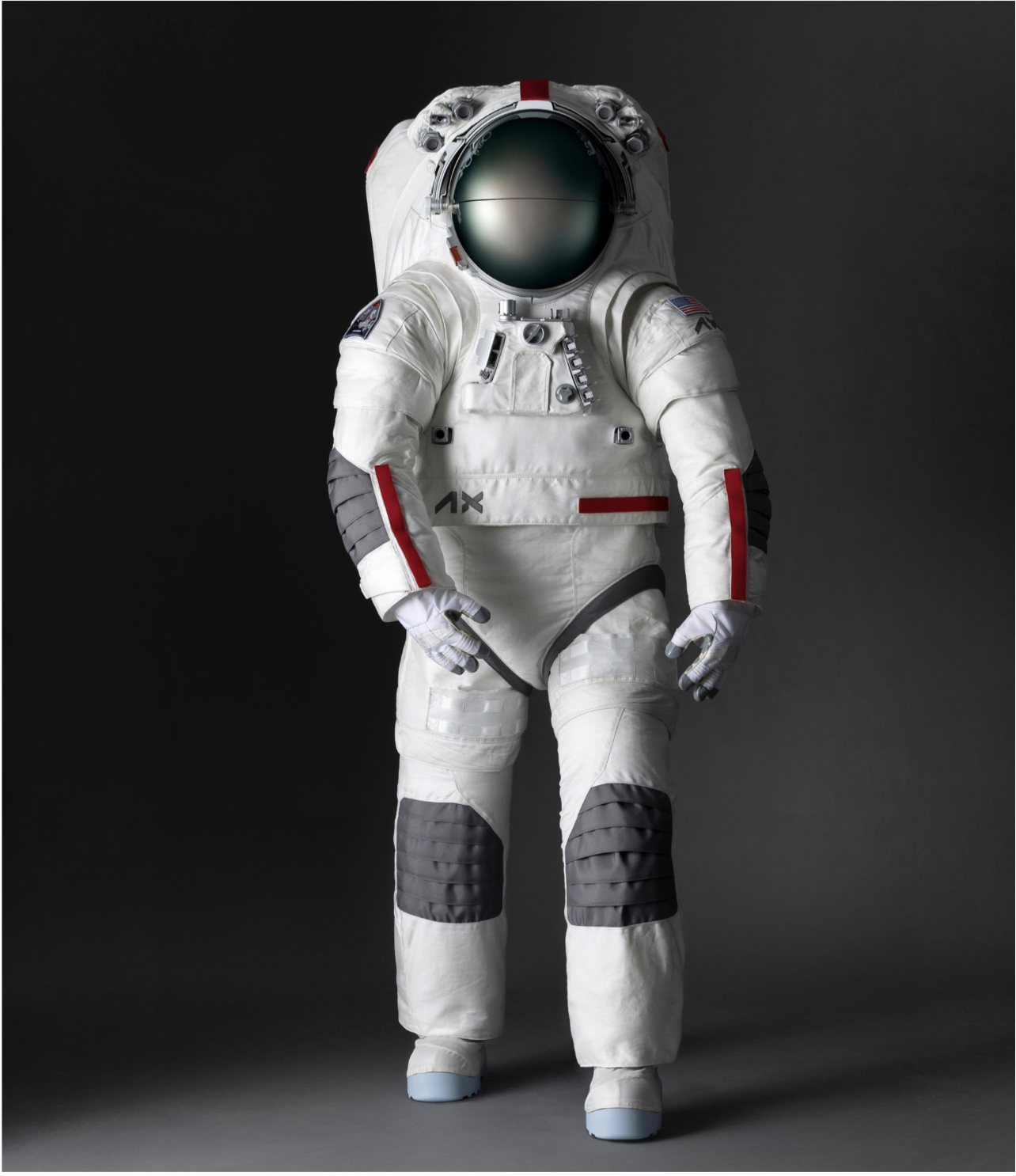
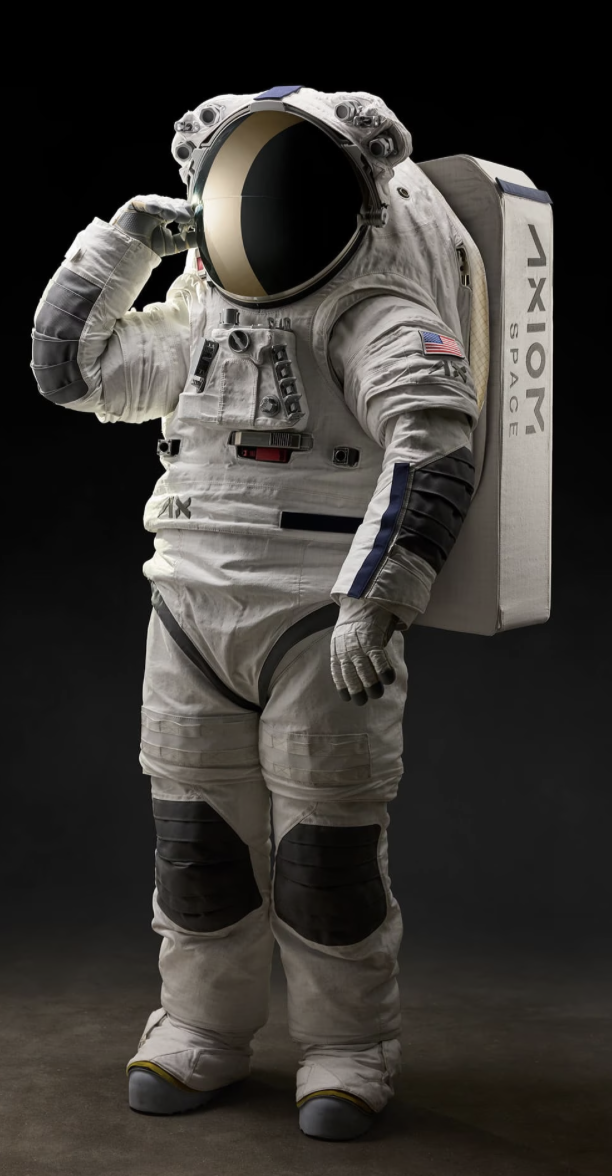
The Artemis missions are a very big deal. And if you don’t believe me, believe Prada. The Prada Group has been collaborating with Axiom Space on their Axiom Extravehicular Mobility Unit (AxEMU) spacesuit to protect astronauts from the harsh conditions of the Lunar South Pole during Artemis III. The whole lunar landscape is fairly treacherous, the atmosphere stretched extremely thin over the crater-pocked terrain. In the shadows, temperatures plummet, and in the sunlight there’s little protection from extreme radiation. Prada’s main contributions have been towards protecting astronauts against these conditions, applying expertise in material engineering and sewing to the inner and outer layers of the suit.
Their touch isn’t overt, but Prada’s classic elegance is evident in the sleek engineering of the design and quality of the specialized fibers. While the classic triangular logo is absent, the red stripes on the outer suit bear tribute to Prada’s Linea Rossa collection. Though this didn’t debut on a catwalk during Fashion Week, in the reduced gravity on the Moon, this suit will make revolutionary strides in the world of couture and fashion tech. Very classy work, Prada. It’s also explicitly stated that their goals include landing the first woman on the lunar surface, supported by their design accommodation to standard female measurements. In a statement they released in June of 2026, the CEO of Axiom Space is quoted saying: “The future of space exploration will not be built by any one entity alone, and our partnership with Prada is proof of that.”From Milan to the Moon, Prada’s leading the charge, more brands sure to follow.
In fact, Oakley’s been in on the action, also working with Axiom on the suit’s protective visor to ensure a clear field of view throughout exploration. Their optical technology protects against intense UV radiation and visual obscuration with an anti-warp, anti-scratch substrate. A 24-karat gold stripe runs down the front of the visor to protect against the sun and bestow extreme aura onto the ensemble. Oakley’s technology designs for extreme sports, but the lunar surface will be the most challenging environment they’ve faced so far – I’m interested to see how their work will push the engineering and physics of fashion.
This isn’t the first time the industries of stylistic design and aerospace have collided—search up the space legacy of the Omega watch—and it certainly won’t be the last. Getting to the Moon is only the first challenge of many. Fine electrostatically charged dust grains litter the lunar surface and threaten long term mechanical sustainability and pose risk to respiratory health. The longevity of human presence on the Moon relies on anti-dust measures and as we spend more time up there, I see garmentry becoming extremely relevant to protection. Luckily, there’s been a massive effort to develop a technology called the Electrodynamic Dust Shield (EDS), which utilizes non-uniform electric fields to repel the dust particles via dielectrophoretic and electrostatic repulsive forces. Many different EDS prototypes have been created and tested for all kinds of applications—think protection for solar panels, lenses, thermal radiators (anything exposed to the environment)—and potential for invention has never been higher. For example, fabric woven with conductive threads could use the same “electric curtain method” to transport dust via electromagnetic waves and be incorporated directly into space suits in the future. How will fashion respond practically and creatively as human migration to the moon becomes increasingly more realistic? I’ll stop talking about it for now, but this is my favorite topic ever, so ask me if you’re interested in learning more.
Science has historically faced difficulty integrating into society, often at odds with the church and state for challenging scripture. For example, it took over 300 years for Galileo’s name to be cleared of heresy for his defence of the heliocentric model, long too dead for his rightful “told ya so.” As the price of education rises and its accessibility diminishes, literacy and belief in STEM is of utmost importance. The Artemis Missions are some of the most relevant events to every industry, economy, and technology of our modern age; these expeditions will impact everything and everyone. As demonstrated by Prada and Oakley, the cross-industrial implications are inconceivable, luxury fashion and premium sunglasses only the beginning. If the Apollo program had enough impact to psychologically shift the balance of the Cold War, how will our future be shaped by Artemis? Will humanity unite under the banner of discovery or further divide as we leave Earthen orbit? Some interesting questions for you to chew on.
Anyways, that’s it for now. Fund science! Thanks for reading!
Some cool links:
https://www.prada.com/us/en/pradasphere/special-projects/2024/prada-axiom.html
https://www.nytimes.com/2024/10/16/style/prada-axiom-space-suits.html
https://www.axiomspace.com/release/engineered-for-astronauts-next-gen-visor-system
https://ntrs.nasa.gov/api/citations/20200000920/downloads/20200000920.pdf
