Words by Sofie Fu (@sofieerei)
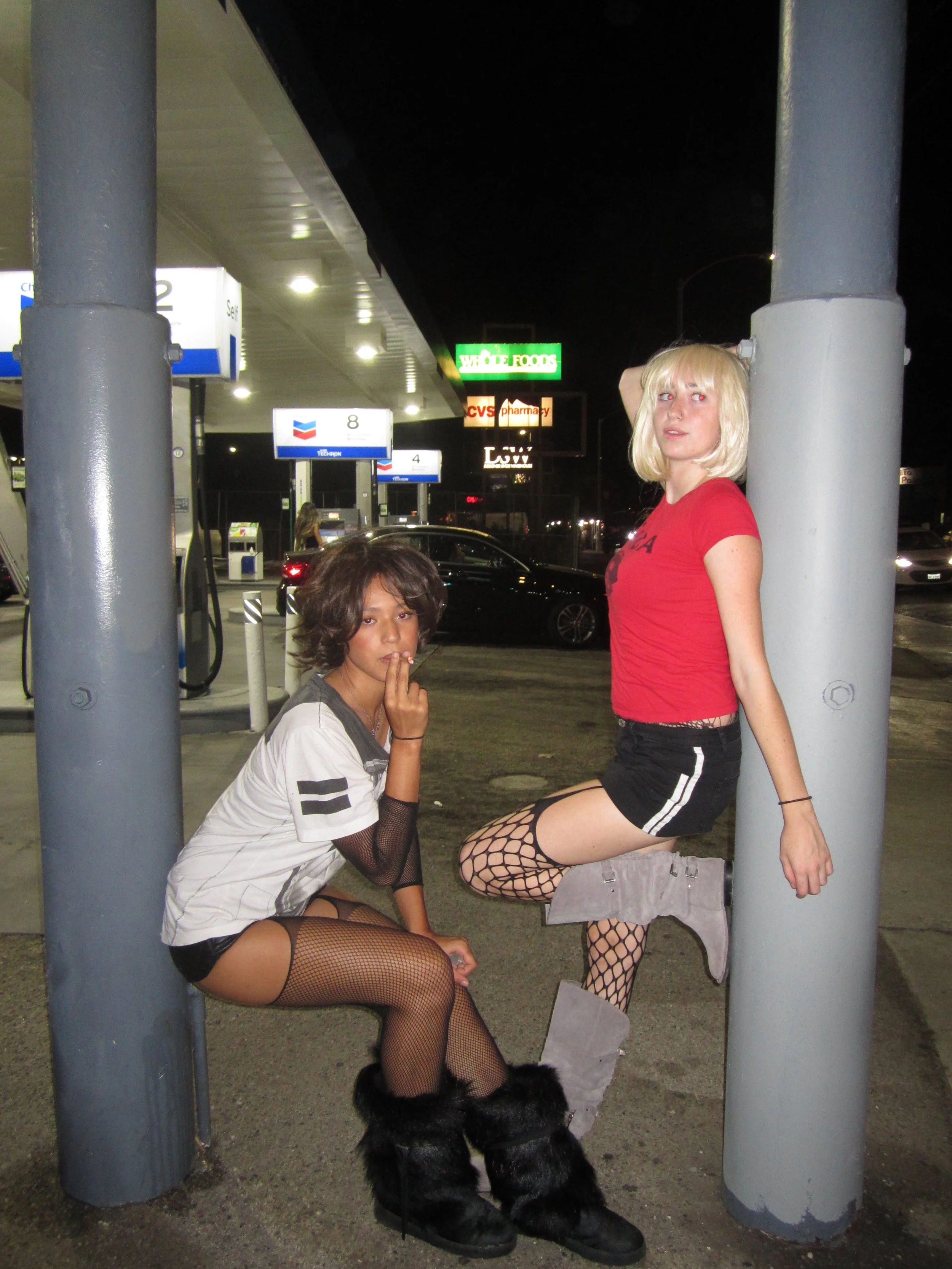
I’ve spent the majority of my life thus far being a little bit “too much.” I come from a long lineage of women who refuse to be confined to a small amount of space. We take up room. We talk too loud, joke too frequently, walk too quickly. We refuse to be defined or demeaned by the qualities we view as our strongest ones. I’ve learned to communicate this trait through my style of dress, which, on occasion, might influence the aforementioned women in my family to think they taught me to be a bit too provocative.

The majority of my high school and college experience has been spent dressing more excessively than the situation requires. Luckily for me, and the fellow “too much”-ers, none of my schools have ever enforced a dress code: I can remember wearing my favorite hoodie, print reading “ROLLING FUCKING LOUD,” to class more times than I can count. The lack of restriction allows me to blend in properly.
When walking down the streets of my hometown, it’s evident that promiscuity is inextricably linked to daily life: a group of girls in short shorts on their way to a hungover brunch, whale tails galore, and expletives everywhere. The idea that seemingly “inappropriate” modes of dress were confined to a night out on the town –or behind closed doors– was foreign to me.

Upon touching down in Berkeley and acquainting myself with the culture, I’ve started to notice that the same clothes I wore in high school can feel strangely conspicuous. I felt the stares when I wore a baby tee reading “KILLER TITS” to the dining hall. Suddenly, the process of picking up the nearest article of clothing and slapping it on for a three-minute walk morphed into a performance, a declaration that I was someone and I was going somewhere. That I needed to be looked at. The attention I was given made me feel as though I was asking for it.
When I observed those around me, I noticed they had a graceful, stylish unobtrusiveness. Everyone seemed to follow a dress code I wasn’t aware of. Suddenly I felt like a circus clown in lower Sproul, watching silk midi-skirts and spaghetti strap tanks slip by me. Even at parties, I stood out: an outsider amidst denim skirts and tube tops. Was there a seminar I had missed? What was the formula?

Since being a new admit was already enough to contend with in itself, I decided I would reduce myself to what I deemed to be the acceptable Berkeley culture. I let my style become demeaned into a need to be seen, and I admonished myself for seeking attention. I wouldn’t be “too much.” Not only would I change my mode of dress, I’d talk more quietly, joke less often, walk a bit slower.
This wasn’t easy to maintain. Laundry day became a bloodbath. I started borrowing clothes from my roommates; Alo, Aerie, Aritzia—all the As. I found myself running out of clothes that didn’t show skin, and weren’t the brightest shades of the ROYGBIV. I found myself searching for something, anything that didn’t cause a lingering look when I walked down the street.
I began running out of steam, and that’s when I started to wonder: why am I doing this? Why do I care? I began considering why anybody even bothered to stare.
Maybe this is in part due to the difference between Berkeley and Los Angeles. In LA, the land of glitter, showbiz, Tumblr girls, and failed aspirations—as well as very hot weather— everyone has their own thing. The experimental nature of the fashion scene makes it difficult to judge, because whatever you’re wearing is likely just as ridiculous, vibrant, or immodest as the next person. At Berkeley, I am often the most conspicuous person in the room.
Oftentimes, women are discouraged from dressing provocatively in any way, shape or form. This is particularly apparent at Berkeley. The prestigious reputation of the school encourages professionalism, modesty, and occasionally, conservatism from its students. Standing out can often equate to not being taken seriously. A short skirt is permissible at a party, but on a grocery run, it says something about you.

If you’re asking me, this places an unnecessary amount of meaning onto the clothes themselves. It suggests that certain bodies are allowed to occupy certain amounts of space, or dress in a certain manner, only when given a reason. I had never asked for a reason before. I decided not to ask for one again.
I decided there was room for both the groutfit-with-a-full-face and the miniskirt-with-no-makeup. There is room for a 10:00 AM walk from my friend’s apartment in the clothes I wore clubbing the night before. There is even room for the objectively questionable outfit. I realized the most liberating way to dress was not to prioritize what the setting called for.
Maybe I am “too much,” maybe plenty of us are. But my “too much”-ness isn’t in need of being analyzed or decoded: it was born into me and has grown with me.
So maybe we should make room in Berkeley for clothes to be less serious. Wear the tiny shorts to class. Wear the tacky, ridiculous outfit to the Target in Downtown. Take up space. Be “too much.”