
A Series of Unrelated Men
Words and graphics by Anya Ramaswamy (@anyaramaswamy)
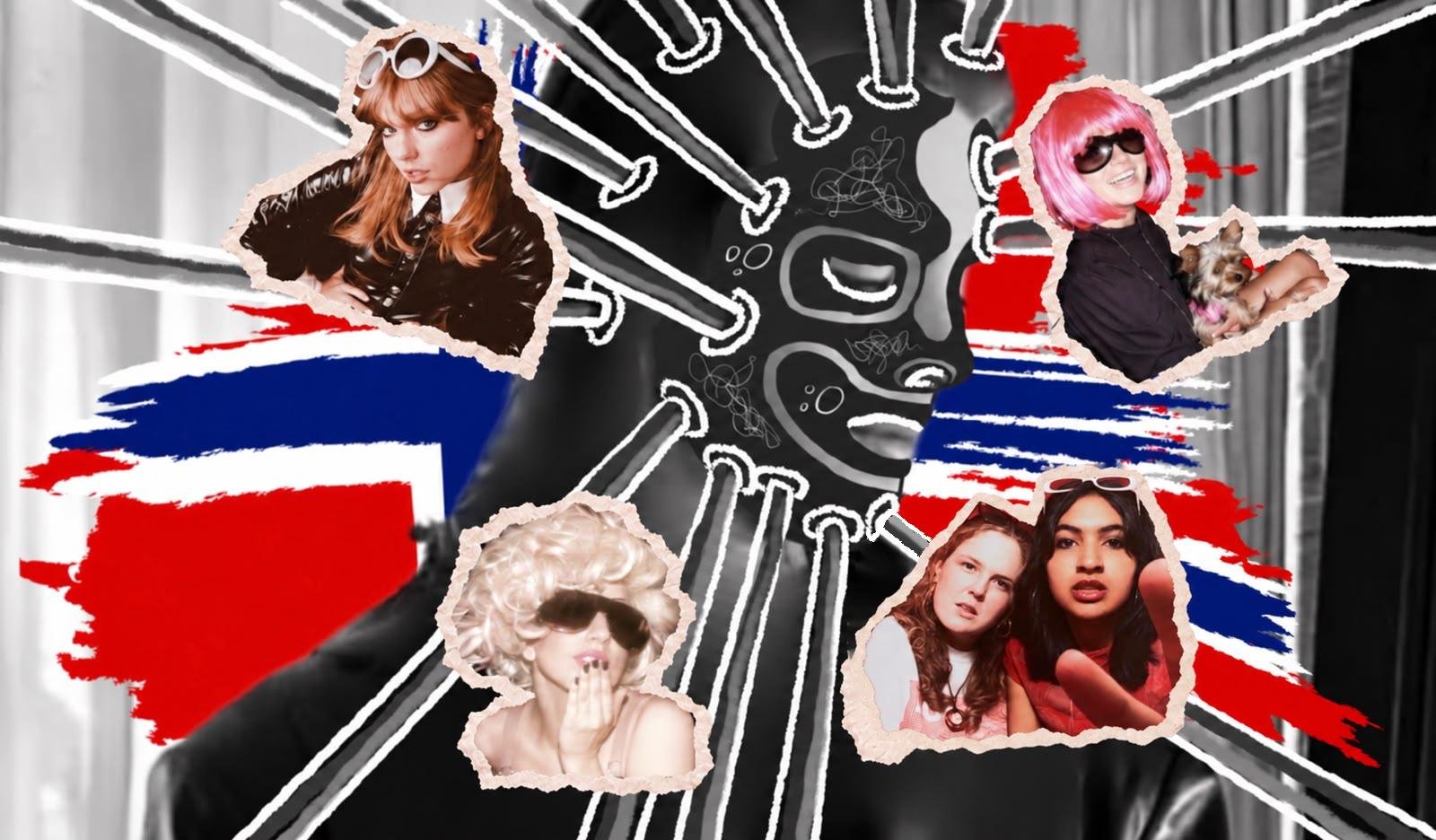
There are normal things to do three years after your friend breaks up with a man. Writing about him for a fashion catalog is probably not one of them.
This isn’t an act of revenge. Revenge would imply a level of emotional clarity I don’t have about this man. He’s one of those people you’ll tell your children about with the phrase “back in my day,”—not because he was important to you, but because twenty years later you’ll still occasionally remember something he did and wonder if you made it up.
Every encounter with him carried the faint shock of rediscovering that he existed. Some people are explained by their relationships. Some people are explained by their childhoods. With this man, his individual trajectory is sufficient.
Before the JNCOs, before the black metal, before the handmade band merch, before the $3,000 Siberian hat, he liked Taylor Swift and Lady Gaga.
This is important.
There’s a temptation, when observing a man in his final form, to assume he emerged that way fully assembled. That somewhere in adolescence he simply appeared in a parking lot wearing an illegible band T-shirt, carrying a vape, and explaining why the first demo was actually better. But men like this have origin stories. His story began, strangely enough, with pop music.
Then came Metallica and Slipknot.
The conversion wasn’t immediate. At first it was almost charming. He started making patches and sewing them onto jackets himself. He made his own band merch. This was, annoyingly, actually cool. There was something sincere about it. He liked something enough to learn how to make a physical object. For a moment, taste was productive.
Unfortunately, sincerity is a gateway drug.
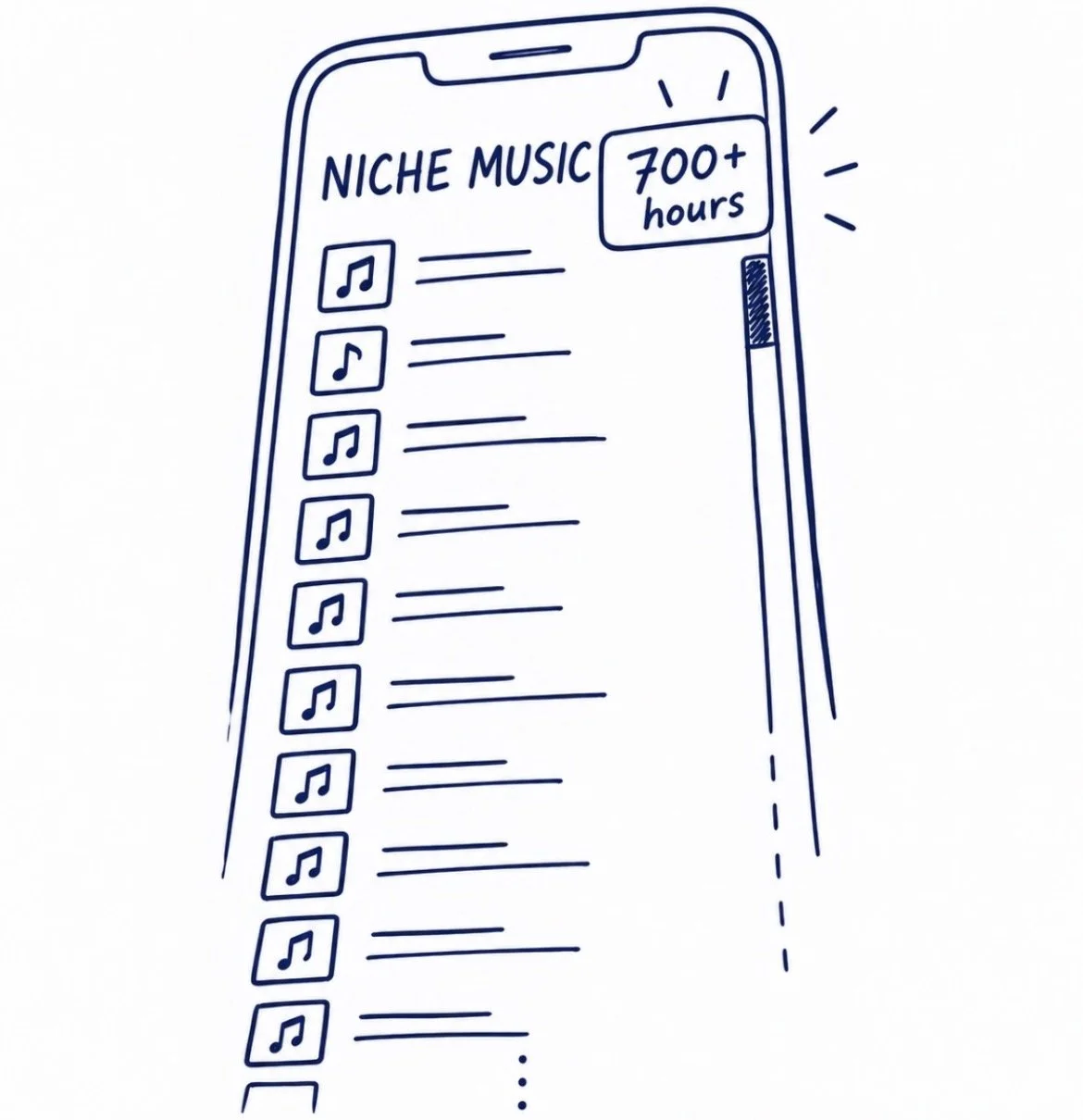
Soon it wasn’t enough to listen to bands. The bands needed to become more obscure. Then even more obscure. And finally, choosing obscure enough bands that listening to them could constitute a personality trait.
His playlists stretched into the hundreds of hours. At some point, this duration itself seemed to become part of the point.
Then came Norway.
He became interested in black metal, a genre that’s never exactly suffered from a lack of visual branding.
Suddenly there were new clothes, new references, new mythologies. A teenager in America could, with enough commitment and internet access, begin carrying himself with the spiritual gravity of a man who personally emerged from a Scandinavian forest in 1993.
His previous self didn’t disappear so much as become embarrassing evidence.
Pop music gave way to metal. Accessible metal gave way to obscure metal. Obscure metal gave way to black metal. Each new discovery seemed to indict whatever came before it.
This was a recurring feature of his evolution. Every new version of himself behaved as though the previous one were a clerical error. And there were, inevitably, complications.
The pursuit of increasingly obscure music brought him into contact with bands whose politics were harder to separate from their aesthetic. Misogyny and white supremacist imagery started appearing in the orbit of the music he consumed.
This is one of the problems with treating subculture as a treasure hunt. If obscurity itself becomes proof of seriousness, eventually you stop asking whether something’s good and start asking whether anyone else has heard of it. Those aren’t the same question.
Then came hardcore and screamo.
The Norwegian fog lifted. The pants got wider. This transition was almost impressively complete. The frozen forests vanished. In their place came basements, breakdowns, local shows, and a new social ecosystem. The point of reference moved several thousand miles southwest, spiritually speaking, and his wardrobe followed.
This is where the JNCOs come in.
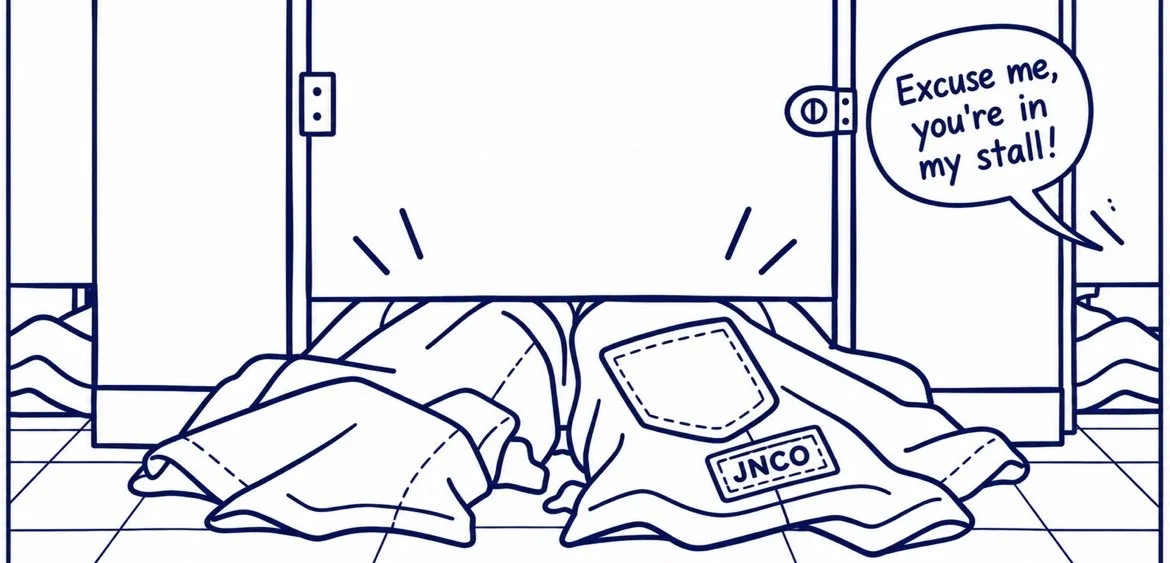
I can’t overstate the width of these pants. A normal pair of pants occupied roughly the same area as the person wearing them. These pants had territorial ambitions. In a bathroom stall, they behaved less like clothing and more like floodwater. Once deployed, there was no visible tile. The denim simply continued.
His clothing raised logistical questions that I’ve got no interest in answering. By now, though, his wardrobe was functioning almost like sedimentary rock. Each layer preserved evidence of a previous civilization: pop fan, metalhead, black-metal Scandinavian, hardcore kid. You could excavate him.
Then came Ken Carson and Playboi Carti.
Another hard reset. The JNCOs at least belonged to a recognizable lineage of hardcore and alternative dress. Opium offered something sleeker, more consciously constructed: black clothes, exaggerated silhouettes, vampiric references, the strange convergence of rap, goth, high fashion, and teenage boys who discovered Rick Owens JPEGs.
This was also the point where the transformations stopped being merely visual. Around this period, he started imitating Black people. The friends around him inevitably found it offensive. Several distanced themselves from him altogether.
Up to this point, most of his reinventions could still be filed under embarrassing adolescence: strange clothes, strange music, strange levels of commitment. This was different. A pair of JNCOs can be a costume. An accent tied to someone else’s race isn’t.
And this is where the idea of endlessly trying on identities starts to curdle.
Everyone does some amount of imitation. Nobody invents themselves from raw materials. We see someone who looks interesting and steal a little. We hear a song, and suddenly our shoes look wrong. You spend enough time around people dressed a certain way and six months later there’s mysteriously a carabiner attached to your pants.
This is normal.
The unusual part is the velocity. He entered subcultures like a witness protection program. Each one arrived with a complete starter pack: clothes, music, social group, vocabulary, posture, worldview.
Which brings us to the hat.
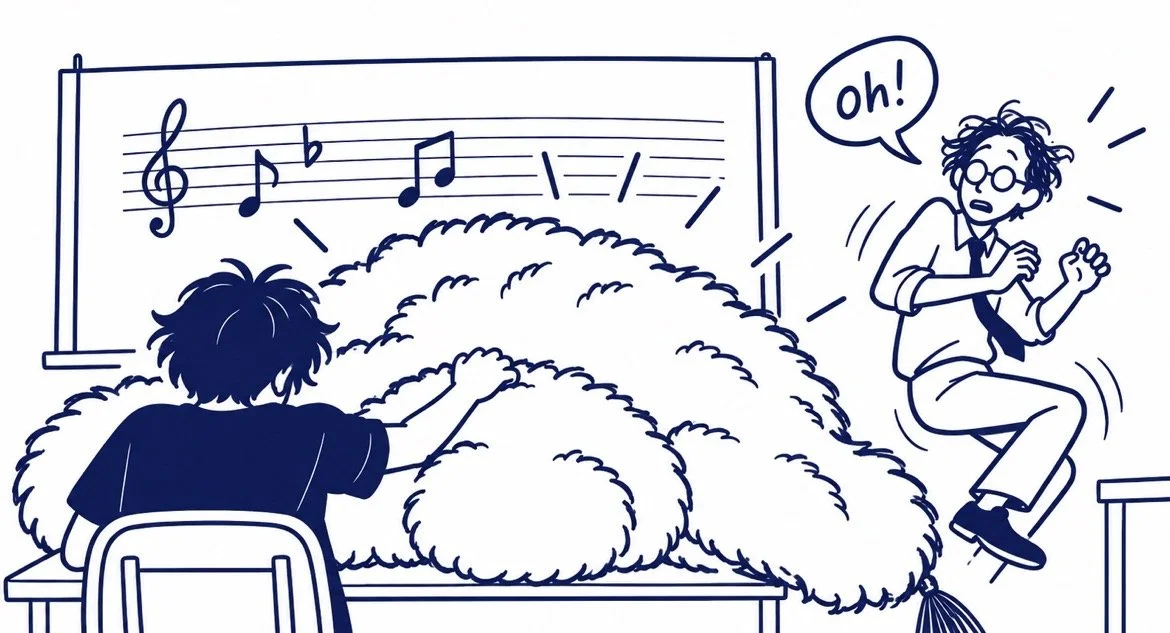
At some point during the black-metal-adjacent years, he acquired a Siberian fur hat that cost around $3,000. Three thousand dollars. For a hat. One day he walked into music theory class carrying it and slammed it onto the table. The teacher jumped. An object so aggressively committed to communicating something that its entrance precedes the person wearing it.
The hat didn’t accessorize him. He accessorized the hat.
It’s also difficult not to compare this version of him to one of his earliest eras: the one making patches by hand. Somewhere along the way, DIY band merch became a luxury fur hat with the budget of a small municipality.
There’s something almost too neat about that progression. The first version of his style required him to make things. The later versions increasingly required him to acquire the correct things.
At first, taste produced objects. Eventually, objects produced taste.
And now, he’s in Florida. Not metaphorically. Actually Florida. He attends a notably conservative school and, by the accounts that reach me, has settled into yet another social environment with its own uniform.
The Scandinavian mysticism is gone.
The hardcore basement is gone.
The Opium phase has receded.
Now there are boys who call women “females.”
It’d be tempting to describe this as the final form.
I don’t think there is one.
That’s probably the only consistent thing about him. There’ll always be another scene. Maybe everyone’s doing some version of this. Maybe personal style is just an accumulation of people we briefly wanted to be. But most people leave some evidence of themselves behind.
That’s the part I keep returning to. Not that he changed. Everyone changes. Not that he copied. Everyone copies. It’s the thoroughness. The way each new self seemed to overwrite the one before it. The way a taste in music could become a wardrobe, a wardrobe could become a vocabulary, a vocabulary could become a friend group, and a friend group could move you from Norway to Atlanta.
I don’t know what he believes now. I’m not sure belief was ever the point. There’s another version coming. Different music. Different pants. Different friends. Some new object placed very deliberately on a table. Somewhere, someone looking up and thinking: What the hell is that?
