
the argumentative essay
Words by Dylan Williams (@princessskyhigh)
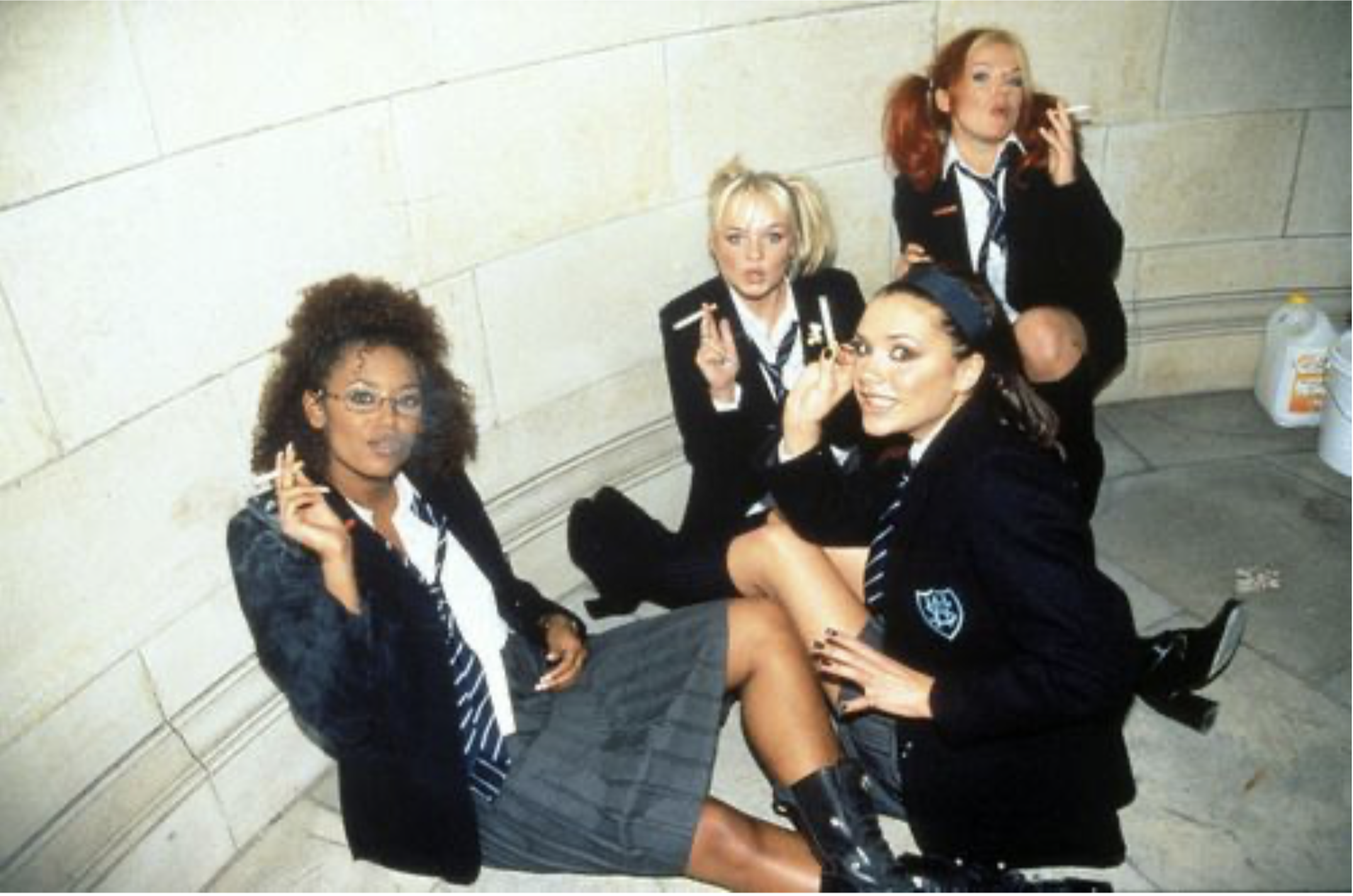
it is the pillar of elementary instruction that when you get to the unit on the argumentative essay, you will have to pick and defend, with credible evidence, your position on the use of uniforms in schools. however, my fourth-grade teacher, ms. salcedo, saw an opportunity to challenge our rhetorical writing skills and had her class blindly pick a slip of paper from a tall, red-and-white striped top hat, labeled “for uniforms” or “against uniforms.” i had the last turn at the top hat and got the last slip of paper lying at the bottom. it was badly folded and i could even partially see the word uniform on it. before picking, everyone had already chosen their side. it was not because we had a strong opinion on the matter but because we chose the side we thought would be easiest to defend. i went back to my desk and wondered if i was given the side that i wanted to write on. when we finally got to open the slips, my side was for uniforms.
this is not some ragebait or clickbait essay on creating a new trend or reintroducing some past trend into the zeitgeist. this is something that i really and truly passionately wish to see implemented not only into elementary schools, but even up to the university level. yes, i am saying that berkeley students should wear uniforms.
those closest to me would immediately point out my biases. i went to a k-8 school where i had to wear a uniform. i wore my catholic school uniform every sunday. i was forced to volunteer at my city police department and wear a light blue version of the police uniform. so those around me would argue that i have developed a fetishization of uniforms; i have been brainwashed with trauma; i simply yearn for nostalgia.
however, i must point out that i consistently won best dressed in high school and community college, where i wasn’t wearing a uniform. even now, i write for the eclectic, exclusive, and ever fashionable garb club. so i would like to think that i have lived on both sides of the debate, and with careful consideration, i posit my argument.
firstly, the uniform should return because people are terrible at dressing themselves. if the reader and i were to take an afternoon stroll, or better yet, go glade on a busy wednesday afternoon, right when classes are let out, what would we find? an outfit inspiration? a top, shoe, or accessory you immediately need yourself? no, none of the above. or perhaps so, if my reader is so clueless. you will find plain blue jeans and a boring quote-unquote statement top, men in ill-fitted suits paired with flip-flops, a sea of cropped jackets, a mob of the latest niche sneakers. yet i don’t blame the berkeley populace, nor do i blame anyone who dresses horribly. life demands a lot from us and we are constantly faced with decisions. spending twenty minutes in front of the mirror deciding what to wear is simply another frivolous decisions that has to be made, many times without a care in the world. we pull every last piece of clothing from our closet and still decide to go with what’s in the hamper. having to face so many decisions, especially early in the morning, is not good for your health and certainly not good for your style. that is why we see so many students, worried about midterms, getting into some club, or figuring out what the fuck you want to do after you graduate, dress “comfortably.” the people don’t have the brain power to spend on such frivolous things as deciding what to wear.
if we implemented uniforms, then at least we could expect that we all would look good and presentable. if your uniform is wrinkled or stained, that is an issue with the wearer and not a fault on the overall presentability of the uniform and its clean, respectable look.
yet the reader thinks to themselves: well, actually, i like going through my closet and spending hours getting ready. i like having the freedom of choice. i like the fact we don’t dress alike. and in response, i call bullshit– how much of that choice is actually yours? we like to think that our style is original, that how we look and how we present ourselves is within our control. but our choices do not exist in a vacuum, especially in our consumerist society, where we have tens of thousands of garments to choose from, which we interpret as an abundance of individual expression. but how many times is your style a rip-off (or rather, less harshly, some new era you’re entering) of something you saw in a movie or show, pinterest, a reel, an influencer. how many countless dazed, i-D, garb articles have you read that announced the return of indie sleaze, skinny jeans, cottage core, y2k, eusexua vibes, or something. there is nothing inherently wrong with this. trends are fun, fashion should be fun, and stealing ideas from other people is basically how art and culture is made. but if and when the thousands of those garments are grossly produced, marketed, and circulated within a relatively narrow set of cultural trends (that now last no longer than a tik-tok), then discarded into some part of the ocean or a third-world country, i question how much individuality and choice are you, we, actually exercising? because when you refute the uniform so quickly on the grounds that it takes away your individuality, i, like miranda priestly, will look you up and down, and ask if you notice that you’re already wearing one.
i now look at subcultures—are they not defined by their uniforms? take the punk attire for example. what does it mean to dress punk, or, for the intents and purposes of this essay, what does it mean to wear the punk uniform? there is certainly an aesthetic to it that we all recognize: ripped jeans, patches, band tees, piercings, whatever combination of objects and garments that communicates that particular identity. and that uniform, like all uniforms, creates community. punks can identify other punks. dancers with other dancers. frat bros with frat bros. the list goes on and on and on. clothes tell you who belongs but it also means that the uniform is backed into a corner since anyone can go to hot topic or spencers and buy a completely punk uniform, including accessories. does that make them punk? in the same vein, anyone can buy a berkeley sweatshirt or those ugly berkeley overalls, does that mean they go to berkeley? no, because the clothes communicate something, but doesn’t make it necessarily true. and that is the point! the uniform, as any article of clothing, tells others who one is supposed to be recognized as (more on this later…)
this is also where the traditional academic uniform becomes complicated because uniforms have always carried a cost. i remember going to goodwill or the swampmeet, even using my older cousins' old uniform because uniforms were expensive. the uniform can create a community, but it can also determine who has access to that community in the first place. just like being in a subculture, the uniform naturally alienates you from the perceived others. dressing as a punk means you belong at the punk show, and looking the part makes sure you don’t look like some tech bro invading the space. dressing as a berkeley student communicates that you go to berkeley and not ucla. and yes, there is overlap. there are punk tech bros. i have friends who go to ucla. and there is an importance to this exclusivity. it does brings concerns over the overall look (i am part of the 4% of Black students at berkeley…) but berkeley is berkeley because of its prestige and exclusivity. if berkeley were to accept everyone (regardless of cost but on merit, talent, hardwork), would it even be berkeley?
moreso, if the reader is still caught up with the american ideal of individuality and freedom of choice, how ironic, i argue that wearing the uniform is an exemplary expression of individuality! when we all look different, we naturally point out our similarities. so much individuality that the human brain, who loves to categorize, begins to categorize different types of uniforms: this is how an eecs student looks like, this is how a business student looks like, etc. but when we all wear a different, there is no differentiation between the eecs student and the humanities. but therein creates the differences that our brains also love to see. since it is not overloaded with such stark differences, in an almost threatening, but perhaps anxious way, wearing the uniform brings forth the true individuality of the person because it comes from some place else. whether it is the color of hair, the types of accessories, the shoes, etc., but even on a more human level. because we can not other a fellow uniform wearer, it is only through interaction, knowing them, talking to them, do we see the true personality of the person, not the pinterest broad they have. yet be aware that i’m not trying to say either that by eliminating clothing options we are making people “more equal”. we can all wear cal shirts with matching pants, but someone will have the newest shoes, an expensive watch, the new iphone, the sports car. because in many ways, the uniform makes clear the socioeconomic difference. what i am saying is that, the function of community (we all go to cal) becomes stronger.
now i must also admit that the uniform has long since been a way to conform to anything, especially gender. if i were to ask my younger sister if she’d like to wear a uniform again, she’d say no, not even considering my points. not because they are not valid, but because i must admit that my experience with the uniform is much different then hers. and for a very valid reason, she’d simply say, i always hated wearing the skirt. and oh, how i loved that skirt and its gorgeous pleats. but the uniform, removes all choices and hands us what we are supposed to wear, and that is the unfortunate side. so, when i say i want to return to the uniform, i am not an advocate for gender conformity. i am not saying that girls should wear skirts and boys should wear shorts, but that within our limited options, one can choose whatever. because the uniform is quite versatile. i can choose between a white, light blue, or navy blue shirt. or a white, tan, navy blue shorts or pants. with those limited options, i say, yes wear the skirt or not, just wear pants, just wear shorts, whatever your heart desires within those limited options!
which brings me to my last point, to break the rules, you must learn them. every time i win the superlative of best-dressed, the young journalist always asks: where did i get my inspiration from? and i attribute a lot to the uniform. there is a constraint with the attire that requires an innate sense of self and imagination to stand out. i was always a child that wanted to stand out. i would wear my uniform backwards or wear a cap with it or wear my beige shorts over my navy blue pants. it is through that experimentation within boundaries that i truly understood the effects of minimalism and maximalism, and how to train the others’ eye to notice what you want, or don’t want, to notice. so that now, i am unfazed that you think it's fashionable that someone is playing with patterns or decides to wear boots with their jorts or whatever. it’s tired. my generation has this idea that their style should be played with and experimented; which is true. but it is done in a way that is immature and i blame the lack of uniform. yes, you all look like a kindergartener dressing themselves up for school. and no matter how many times you make that picture of younger you as a profile pic will make me care, or think, you have style. because the problem doesn’t readily lie that you look ridiculous, but that you think by looking ridiculous is itself proof of creativity. but it’s not. you have fun and you're playing dress-up but when it’s time to get serious, when it's time to really get creative, can you do it without relying on a gag.
because when we really get into the nitty gritty of it, my position doesn’t lie that berkeley is a horrible sight for sore fashion eyes; quite frankly, my berkeley googles have been working over time. i don’t have time or energy to care if someone looks bad or whatever. and neither does the reader care if someone is wearing ugly shoes. however, i do find that we have convinced ourselves that the clothes we choose are somehow proof of our individuality. and that by striving towards some god-given right for individuality, we are losing the ability to discern whether we can still differentiate between conformity and individuality. the collective american imagination, since the creation of the american dream, has been about the precarious relationship with choice and freedom. give us fifty kinds of cereal and we call it freedom; fifty kinds of a.i. models, it is freedom. but give us five shirts and that is oppression.
so when i look back to my fourth-grade essay and try to imagine what i could have possibly written and the sources that i chose to defend my argument, i realize the inherent irony that i myself was wearing a uniform at the time and now i am not. i don’t remember whether i actually believed uniforms were good or whether i simply became very good at arguing for them. and in many ways, i think that’s what is happening now. we like to believe that we are living in the most individualistic period of our lives, ever. we can dress however we want, listen to whatever we want, choose and build our own identities, create our own families, our own communities, and beliefs. we literally have more information, opinions, and avenues to express ourselves than ever before! and yet, our choices keep getting smaller. we are constantly asked to choose between the lesser of two evils or what seemed to be so different is actually owned by the same five companies. and eventually, we become so accustomed to choosing between the options in front of us that we stop asking whether those were ever the only options to begin with. this is choice, so they say. and sometimes it is. but in relation to the uniform, it is not an argument that everyone should wear the same clothes because individuality = bad. in fact, it’s the opposite. the uniform causes us to remember what it feels like to recognize a constraint. and when that constraint is visible, you can question it and argue it. but since everyone is dressed differently, we like to believe that everyone is free. the cost of the uniform is replaced by the cost of the new shirt everyone is buying or the new sweater from alo or whatever. because clothes are political. we learn what an activist is supposed to sound like or a conservative is supposed to believe in or a successful person looks like. this is why we are so isolated despite having so many ways to find each other. this control over our others’ perceptions of us. this increasing ability at finding people who already think like us, building entire communities around a shared identity without ever having to encounter anyone outside it. while companies customize our feeds, music, television to reinforce what we think we believe in. and perhaps the problem isn’t that we have too little choice, maybe it’s that we have become complacent about the choices we are given.
