
Get Big Tech Outta Fashion: Palantir’s drop as ugly as their company
Words by Urvi Kulkarni (@urvikul)
In the days before the dot.com bubble burst, tech CEOs were seen as unstylish nerds who were constantly glued to their screens, coding their next big project. Today, tech billionaires are seeking acceptance into the fashion world, looking at clothing as a way to gain cultural capital.
Cultural capital is especially needed by a company like Palantir, the booming military contractor whose surveillance technology has been used by the Trump Administration to track immigrants for deportation. The company’s technology, on a basic level, combines massive amounts of government and corporate data into a single set that identifies patterns. This means that Palantir’s technology can group together people’s addresses, phone numbers, driving records, credit history, immigration history, health data, and social media presence all in one place. Palantir’s AI-powered analytics technology has also been deployed by the Israeli Ministry of Defense for surveillance and tracking to precisely target drone-fired missiles in Gaza. It makes sense, then, why a company like Palantir would be pursuing ways to clean up its image in the public perception. The company’s venture into fashion follows a trend of similar companies, such as Lockheed Martin, the world’s largest arms supplier, with its offshoot streetwear brand sold in South Korea.
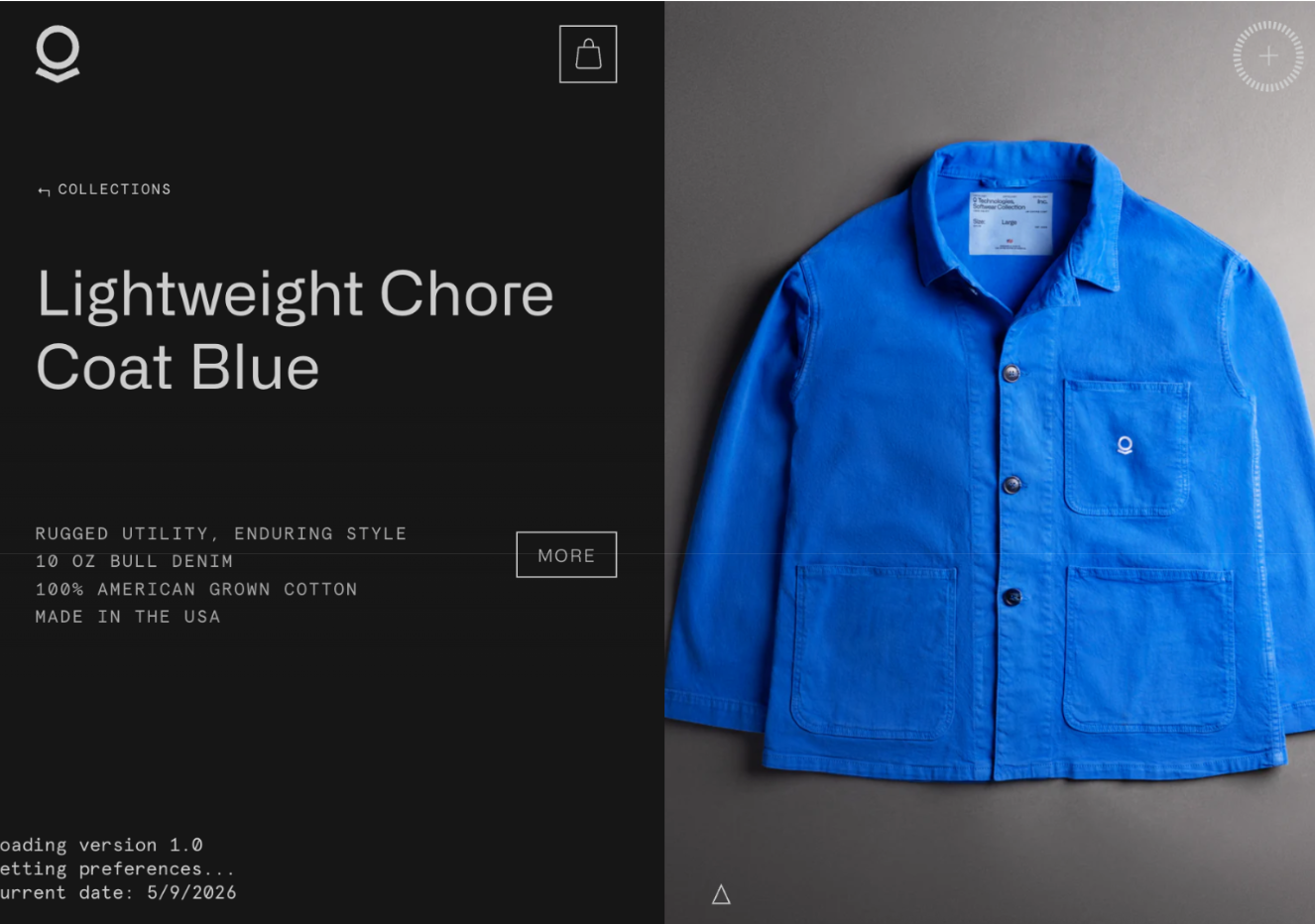
Palantir has sold merchandise for years: hoodies with logos, caps, T-shirts, all marked with the company’s motto: “dominate.” However, on April 30, 2026, Palantir dropped a $239 chore coat that sold out in nearly five hours. The company’s recent drop signals a shift in tech companies from making merch for employees to adoptinng a lifestyle brand-like operation.
The Chore Coat is marketed as 100% American grown cotton, manufactured in the US, and as a piece of “rugged utility” and “enduring style.” This drop signifies a larger goal of the company to gain cultural capital: “the accumulated, intangible value, credibility, and social influence a brand acquires by embedding itself into cultural conversations, art, music, and subcultures.”
Cultural capital cannot be bought. It is built through the use of subtle codes that draw from curated aesthetics. The effective mobilization of cultural capital generates a sense of belonging for the consumer, making them feel like an insider. Brands like Lockheed Martin achieve this by tapping into the growing worldwide fixation with streetwear, while Palantir accumulates capital by targeting the left-leaning, performative male obsession with vintage and workwear styles.
The release of a limited edition chore coat reflects Palantir's goal of shifting its public perception away from that of a Big Brother-like surveillance machine with connections to genocide. Palantir's chore coat mobilizes cultural capital by aestheticizing military surveillance technology: softening the company's image by associating it with exclusivity and authenticity
Palantir’s chore coat is anything but authentic. Palantir stated that the coat was released as part of the company’s mission to "re-industrialize America." Given its workwear aesthetic, the coat aims to shift the company away from its high-tech, white-collar reality. This drop, however, is riddled with contradictions. The inclusion of micrographics in the design hints at an intentional design process. Such micrographics were first made popular by Virgil Abloh’s Off-White™, and could have been mobilized by Palantir designers as a means of gaining legitimacy. Though I doubt that Palantir designers led with much intentionality in choosing these micrographocs. If the designers of the coat had even begun their research, they would have found that their coat more closely mirrors the French blue de travail. The coat’s blue color resembles classic blue moleskin, and its three-pocket design mimics the French style, contradicting the company’s aim to idealize homegrown, American image by associating it with exclusivity and authenticity.
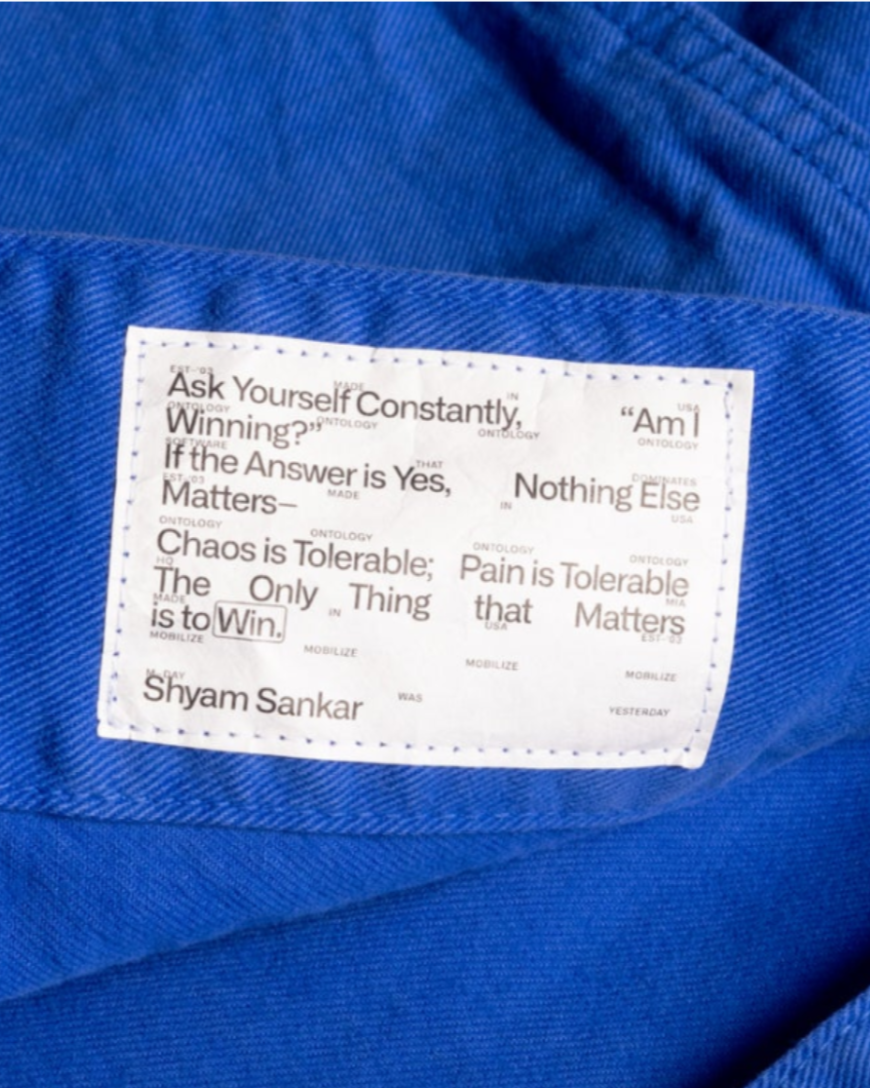
Palantir’s chore coat points to the larger transformation of Silicon Valley elites wanting to dominate American culture. Today, the Tech CEOS are spotted at the front rows of the biggest fashion shows, essentially buying their way into media institutions.

We can see the most direct example of Big Tech's encroachment into fashion when Jeff Bezos purchased the MET Gala Co-Chair positions for him and his wife. Panaltir’s clothing drop is part of this broader shift in the rise of technocratic authoritarianism in America. Palantir, through its chore coat, works to normalize militarism and data extraction through the attempted subtleties of exclusivity and taste.
The growing infiltration of tech companies into cultural institutions raises important questions of who deserves a voice in shaping culture. As tech billionaires continue to gain control over journalism and communication platforms, fashion, art, and media risk becoming an extension of corporate control. Such encroachment will only lead to the stifling of true expression, killing the inherent usefulness of fashion as an outlet for confronting the status quo.
